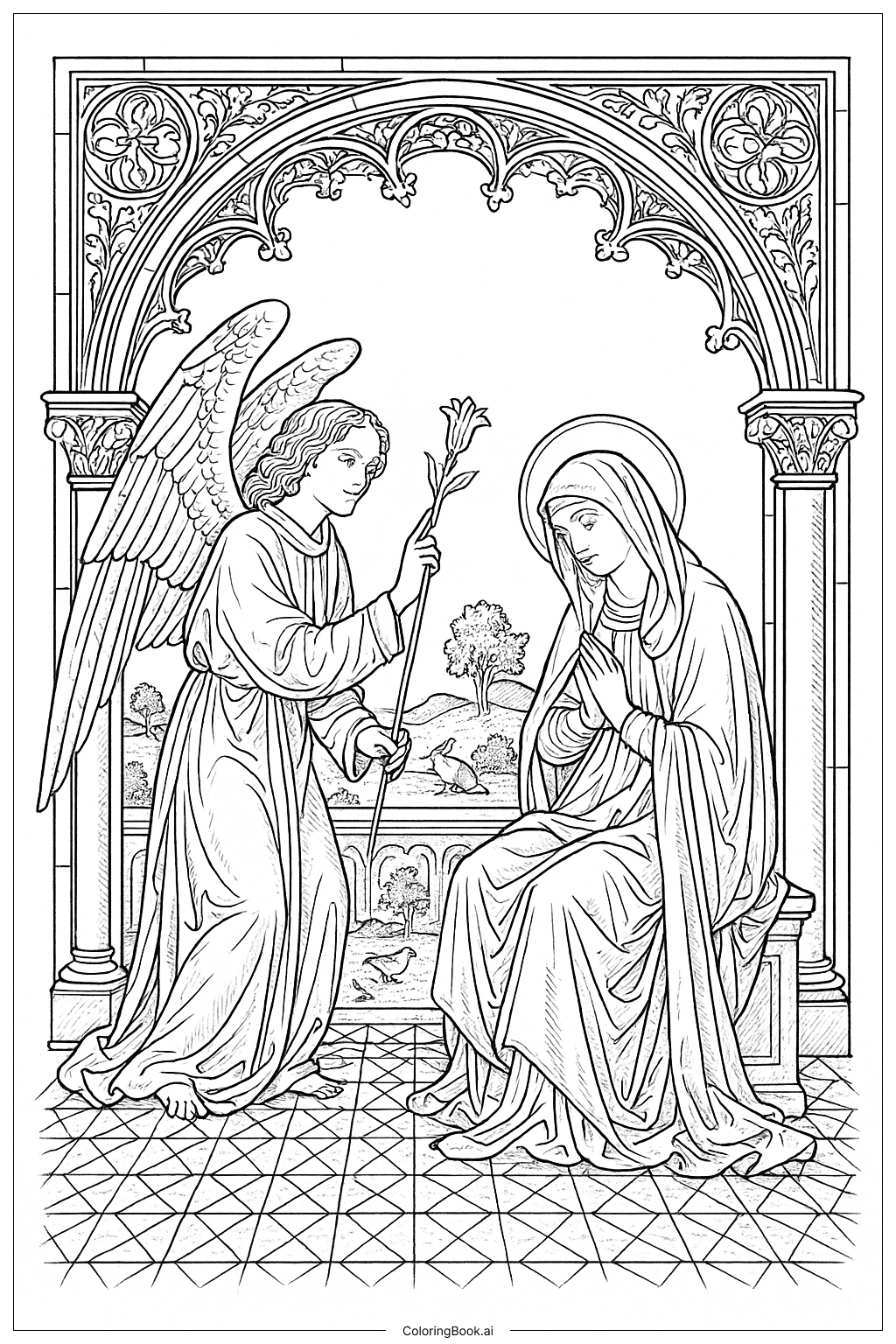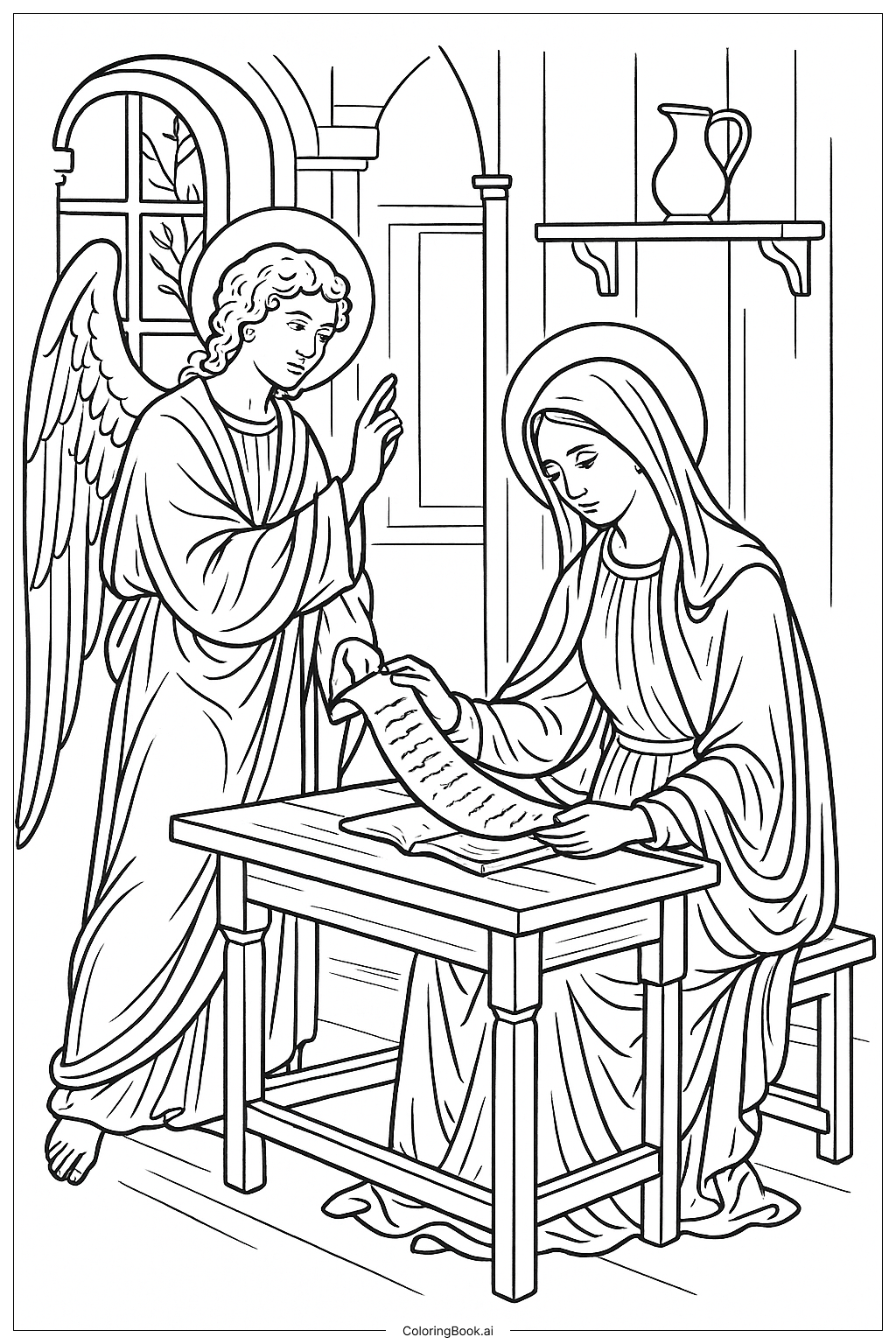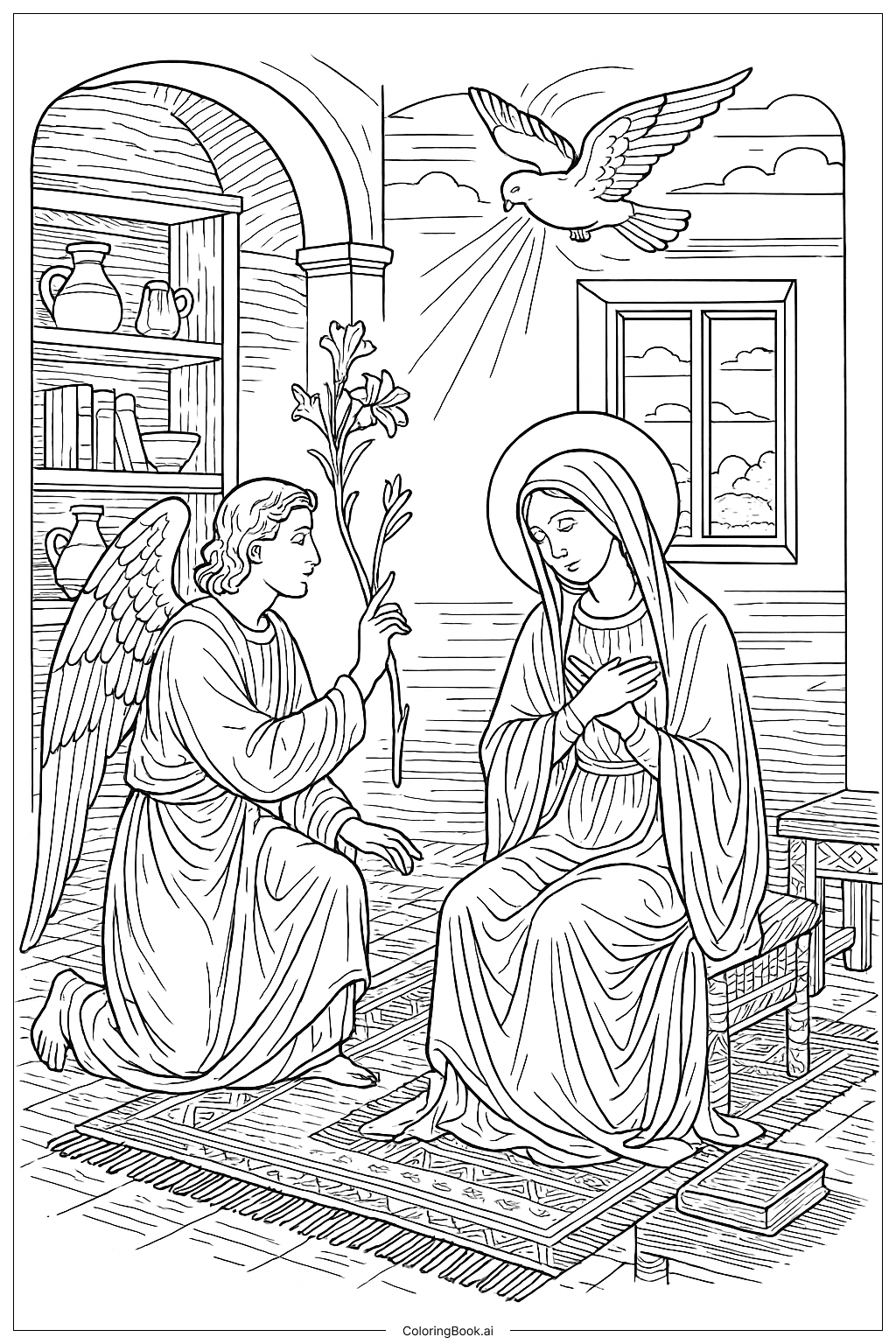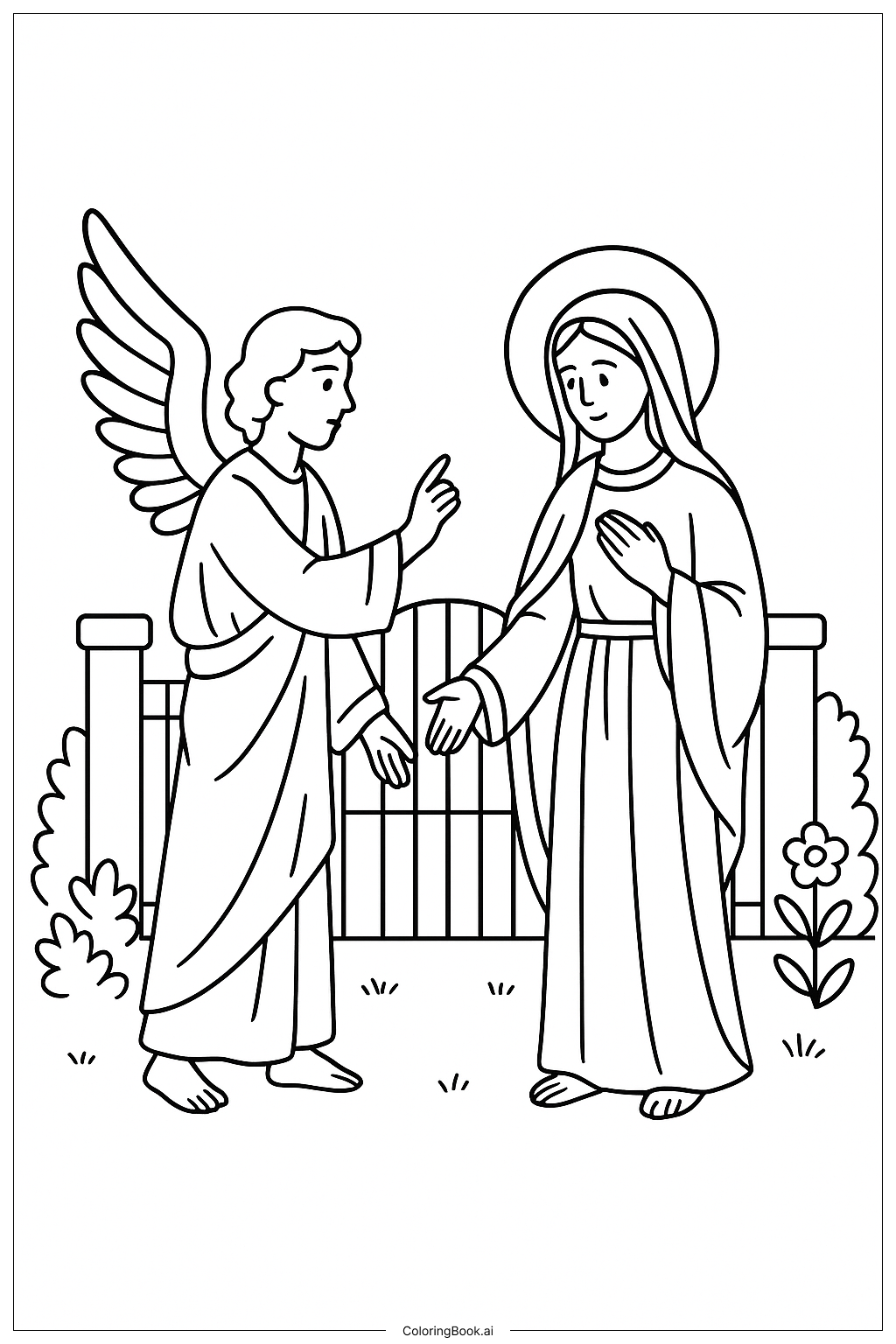
Coloring tips: How to color Annunciation Garden Gate coloring page well?
Use soft and gentle colors to highlight the garden theme. For the gate, try metallic shades like dark gray, silver, or bronze to emphasize the ironwork texture. Use green tones for the climbing plants and vines, combining different shades to show depth and natural variation. You can add light yellows or pinks to the flowers or leaves surrounding the gate to create a joyful feel. The stone frame can be colored with warm beige or light brown to contrast nicely with the green plants. Feel free to use light blues or pastel colors in the background to suggest a clear sky or early morning light.
Coloring challenges: Which parts are difficult to color and need attention for Annunciation Garden Gate coloring page?
• Detailed Ironwork: The gate’s wrought iron features many small and curved shapes. Coloring inside these areas requires patience and a steady hand to avoid going outside the lines. • Plant Texture: The plants and vines have overlapping leaves and thin branches that make it tricky to color each layer without mixing colors. Careful shading is needed to show depth. • Stone Frame Shading: The stone arch has texture and uneven surfaces, so use gradual shading to make it look natural instead of flat. • Flower Details: If you choose to add colors to the intricate small flowers or buds, working on these tiny areas can be challenging for younger children. • Balancing Color Intensity: Making sure the gate, plants, flowers, and stone work harmoniously without overwhelming each other requires thoughtful color choices.
Benefits of coloring books: Advantages of drawing Annunciation Garden Gate coloring page
Coloring this image helps improve focus and fine motor skills due to its detailed parts. It encourages creativity by allowing freedom in choosing natural colors for the plants and stones. The garden gate theme invites imagination, promoting storytelling and thoughtful reflection while working. Coloring organic shapes like leaves and flowers can be calming and reduce stress. This activity also develops patience and hand-eye coordination as children or adults carefully fill in the intricate patterns. Overall, it’s a rewarding experience that blends art with nature and architecture.