Coloring tips: How to color Whale coloring page well?
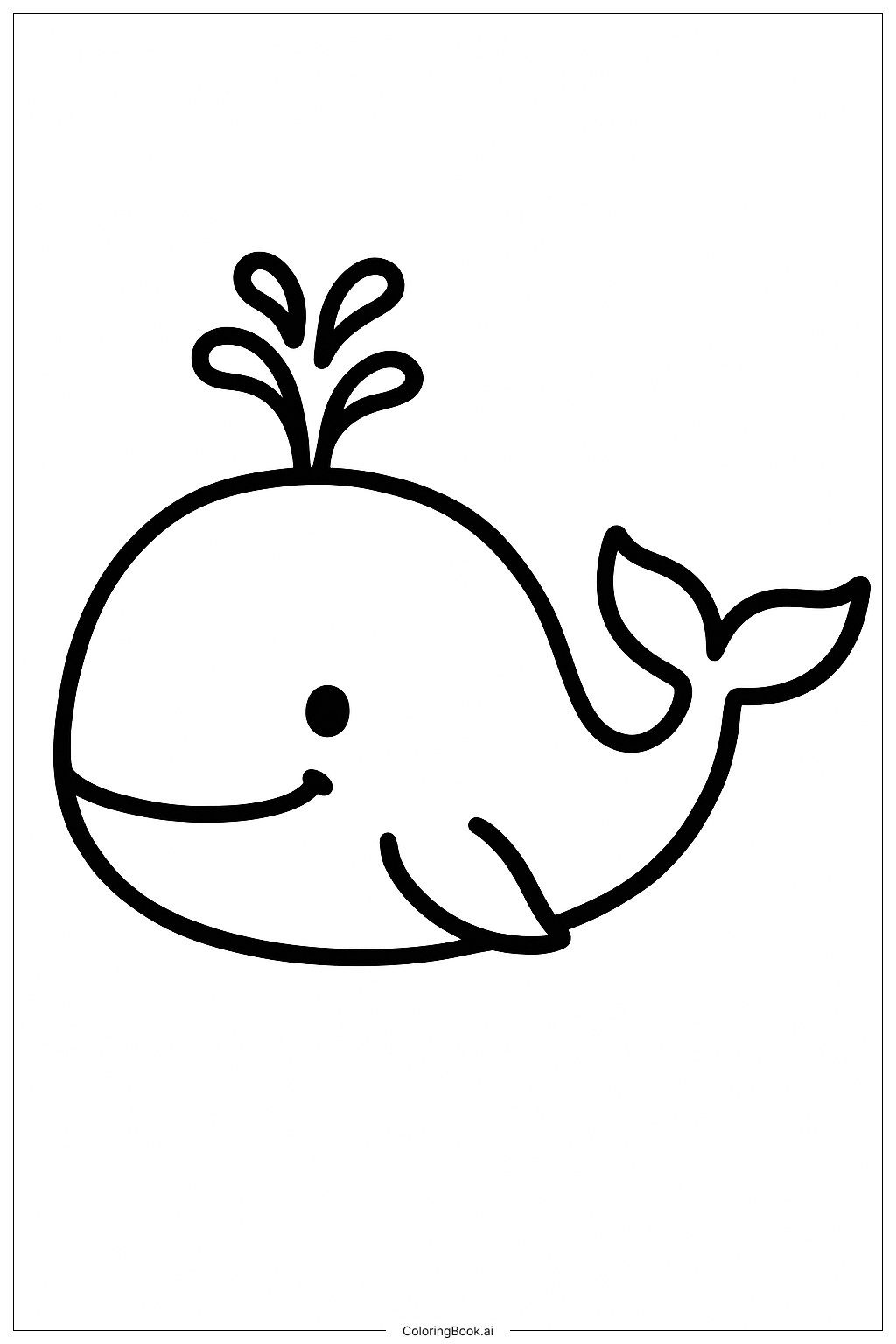
Start with the whale's body using shades of blue or gray. You can use a light sky blue for a playful, friendly look, or a deep navy blue for a more ocean-like feel. Try adding a lighter shade on the belly to create a sense of depth and roundness. For the fins and tail, use a slightly darker shade of the same color family to make them stand out. The whale's friendly eyes can be colored dark brown or black, with a tiny white dot to add a sparkle. Color the water and bubbles in soft aqua or turquoise tones. You can add streaks of darker blue to suggest water movement. Feel free to get creative — some kids love coloring whales in fun, unexpected colors like purple or pink. Add small yellow or white highlights on the bubbles to make them look shiny and real.
Coloring challenges: Which parts are difficult to color and need attention for Whale coloring page?
• Body Shading and Roundness: The whale's body is large and rounded, which means flat coloring can make it look dull. To give it a three-dimensional appearance, you need to blend at least two shades of the same color — lighter on the belly and darker along the top and sides. This kind of gradual blending can be tricky, especially for younger children who are still learning how to layer colors smoothly without leaving streaks or uneven patches.
• Small Details on the Face: The whale has a small, expressive face with tiny eyes and a curved smile. These features are quite small compared to the overall body size. Staying inside the lines when coloring the eyes and mouth requires a fine-tipped tool such as a thin marker or a sharpened colored pencil. Using a tool that is too thick can easily smudge over the outlines and ruin the expression.
• Fin and Tail Edges: The pectoral fins and the tail fluke have curved, tapered edges that narrow to soft points. Coloring right up to these delicate edges without going over them takes patience and a steady hand. Children may find it challenging to follow the curves accurately without crossing the boundary lines.
• Water and Bubble Effects: The surrounding water ripples and bubbles require multiple colors blended together to look natural. Deciding where one color ends and another begins — such as transitioning from light aqua to deeper blue — needs some planning ahead and careful layering to achieve a smooth, believable underwater effect.
Benefits of coloring books: Advantages of drawing Whale coloring page
Coloring this cute whale page offers a wide range of benefits for children. First, it helps develop fine motor skills. Carefully filling in the whale's body, fins, and tiny facial features strengthens the small muscles in the hands and improves pencil control — skills that are essential for writing and other everyday tasks. Second, it encourages creativity. Children get to make their own color choices, deciding whether their whale is blue, purple, or even rainbow-colored. This builds confidence and celebrates individual expression. Third, it supports focus and patience. Staying inside the lines and working through the details of the image teaches kids to slow down, concentrate, and complete a task step by step. Fourth, it introduces ocean awareness. As children color the whale and its watery surroundings, they naturally become more curious about marine life and ocean ecosystems, sparking interest in nature and science. Finally, finishing the page gives children a real sense of accomplishment and pride in their work, boosting their self-esteem in a fun, low-pressure way.