Coloring tips: How to color Seal Animal Playful coloring page well?
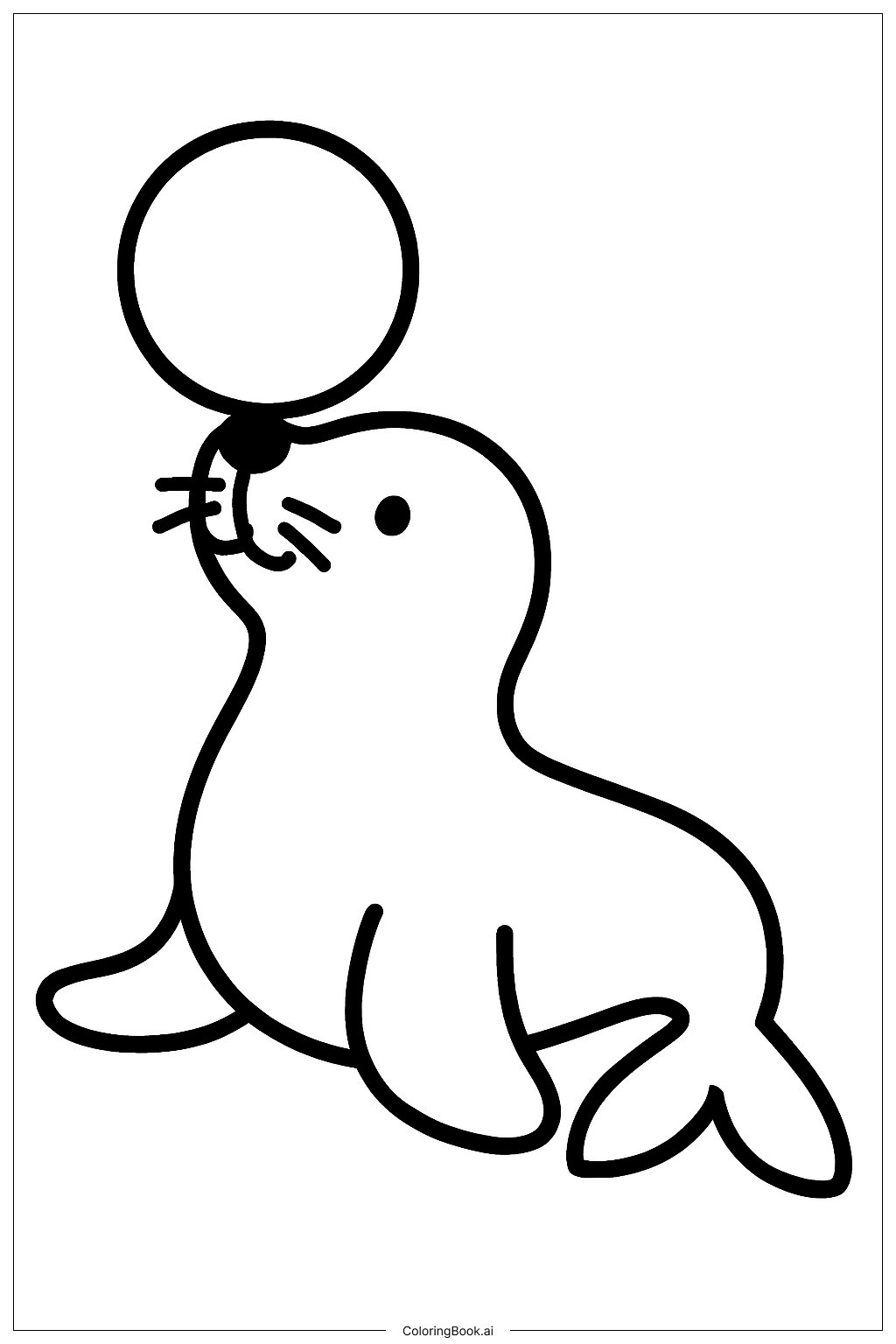
When coloring this image, you can use light to medium shades of gray or brown for the seal's body, as seals usually have these colors. Use a darker tone for the flippers and tail to add some contrast. The ball can be bright and colorful to make it stand out—try red, blue, yellow, or green. You can add shading by using slightly darker colors around the seal's body edges and the ball to give it a 3D look. For the nose and whiskers, use black or dark gray. Feel free to add some simple patterns or dots on the ball to make it more fun. Use smooth strokes to keep the seal's soft and cute appearance.
Coloring challenges: Which parts are difficult to color and need attention for Seal Animal Playful coloring page?
1. Balancing colors smoothly on the seal’s rounded body can be tricky because of the curved lines.
2. Coloring the ball evenly may be difficult since it is a large empty circle.
3. Staying within the thin lines of the whiskers and nose requires careful coloring with precision.
4. Adding shading and highlights to make the seal and ball look more dimensional needs some practice with blending.
5. Avoiding color overlap on the seal’s body and the ball where they touch can be challenging, especially for young children.
Benefits of coloring books: Advantages of drawing Seal Animal Playful coloring page
Coloring this playful seal and ball helps develop hand-eye coordination. It encourages children to use different colors creatively while learning about animals. The simple shapes and clear outlines make it easier for beginners to stay inside the lines, building fine motor skills. Adding shading and color details introduces children to basic art techniques. Coloring this picture also promotes focus and patience, offering a fun and calming activity for kids aged 4 to 16.