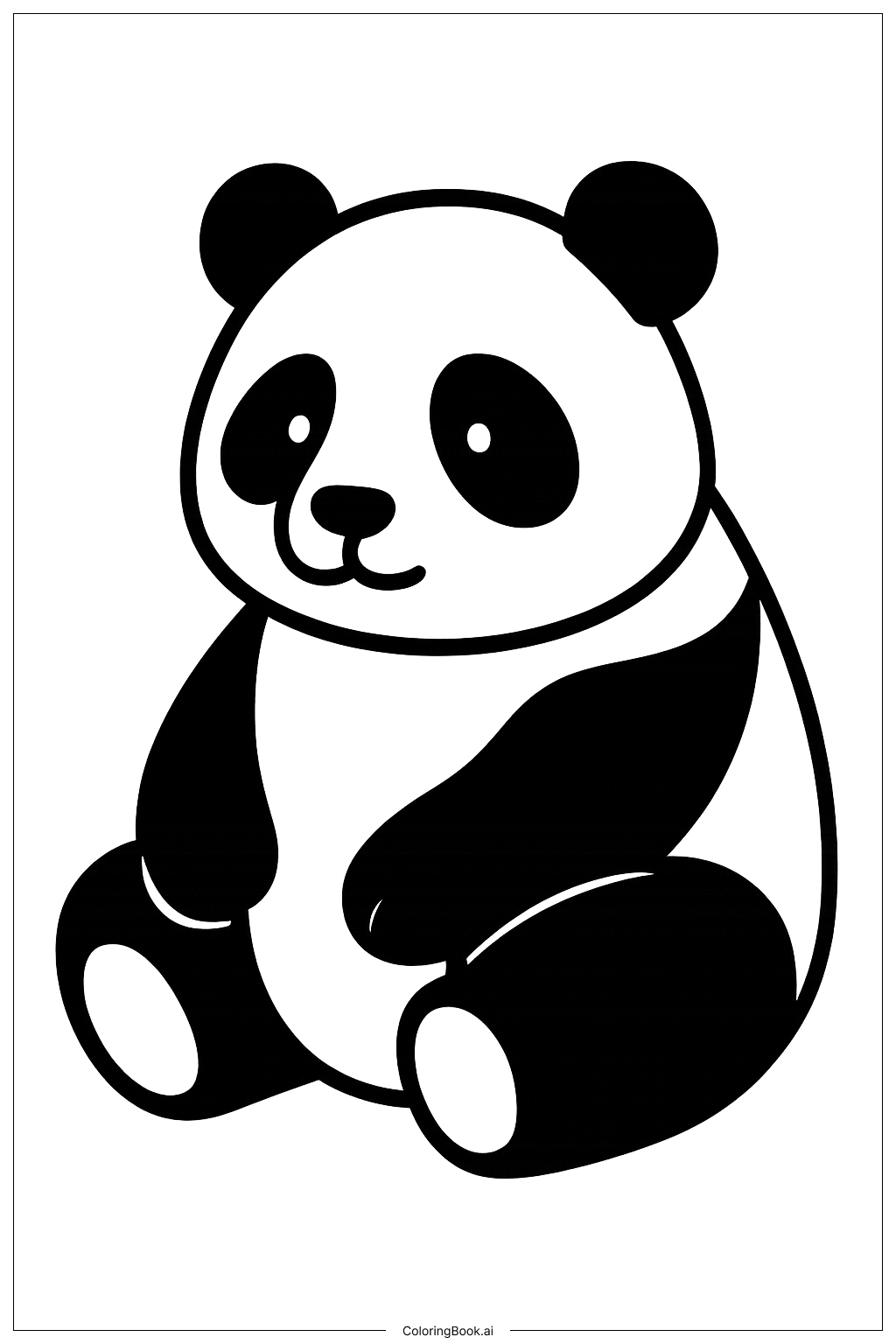
Coloring tips: How to color Panda Animal Sitting coloring page well?
For coloring this panda image, start with classic black and white tones to match the panda’s natural colors. Use black for the ears, eye patches, arms, and legs, and white for the face, chest, and belly areas. To make your coloring page more fun and creative, try adding soft green shades in the background to represent bamboo leaves or grass. You could also use light brown or beige for the ground to give a natural setting. Children can experiment with different shades of green for surrounding plants or even add colorful flowers nearby. Using gentle, smooth coloring strokes will help show the panda’s fluffy fur texture. Remember to keep the panda’s face and body clear so it stands out nicely on the page.
Coloring challenges: Which parts are difficult to color and need attention for Panda Animal Sitting coloring page?
• Fur Texture: Capturing the soft, fluffy fur of the panda using coloring can be tricky. It requires gentle shading to show the difference between smooth white areas and thick black fur without making the page look too dark or flat.
• Color Balance: Balancing the strong contrast between black and white fur needs attention. Over-coloring black areas may overshadow the finer details like the claws or face shape.
• Facial Details: The panda’s face has small but important features such as the nose, eyes, and mouth that need careful coloring to keep the expression gentle and natural.
• Rounded Shapes: The panda’s curved body and sitting pose create many rounded shapes that need smooth coloring to keep the overall form consistent and avoid a patchy look.
• Background Elements: If adding background colors like bamboo leaves or ground, it is important to leave enough white space around the panda so it remains the main focus rather than blending too much into the surroundings.
Benefits of coloring books: Advantages of drawing Panda Animal Sitting coloring page
Coloring this panda image helps improve hand-eye coordination and fine motor skills because it involves filling in detailed areas with care. Children learn to recognize and use contrasts, especially black and white, which promotes visual attention to subtle differences. It also encourages creativity, as kids can choose how to design the background or add colors beyond the typical panda. The relaxed sitting pose invites a calm and focused coloring experience, which can reduce stress and boost concentration. Moreover, coloring animals like pandas helps build awareness and appreciation for wildlife and nature.