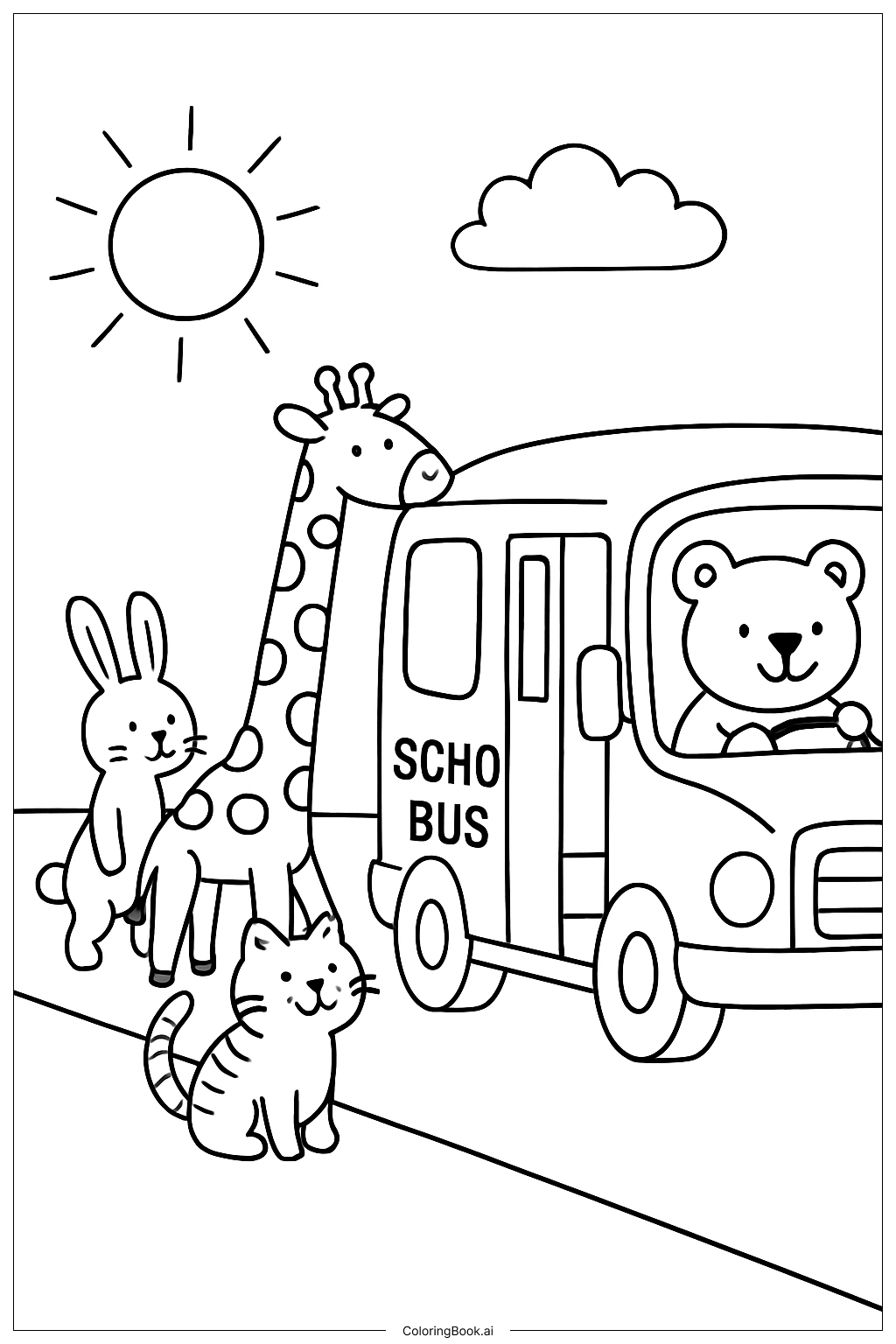
Coloring tips: How to color Animal School Bus coloring page well?
Try using bright, cheerful colors for the Animal School Bus to make it look warm and friendly. Yellow is a classic choice for the bus body, but feel free to add fun patterns or spots to mimic animal fur or skins. Color each animal using natural tones like orange and brown for the lion, grey for the elephant, and tan for the giraffe’s spots. Use different shades of green and blue for the windows and background to give depth. Don’t forget to add color to the small details like the stop sign, lights, and tires to bring the whole picture to life. Mixing strong and softer colors will make the scene lively and inviting.
Coloring challenges: Which parts are difficult to color and need attention for Animal School Bus coloring page?
• Animal Details: Each animal has distinct features that can be tricky to color accurately, such as the spots on the giraffe or the wrinkles on the elephant’s skin. Staying inside the fine lines requires patience. • Small Spaces: The bus windows and the stop sign are small areas that demand careful coloring to avoid smudging or going outside the lines. • Layering Colors: Achieving depth by layering lighter and darker shades for the animals’ fur and the bus body can be challenging for beginners. • Overlapping Shapes: Some animals overlap or are close together, making it a challenge to clearly separate colors without blending unintentionally. • Symmetry and Repetition: Coloring repeated patterns like the bus’s wheels or windows uniformly needs focus to keep a neat and balanced look.
Benefits of coloring books: Advantages of drawing Animal School Bus coloring page
Coloring this Animal School Bus image helps children develop fine motor skills as they carefully fill in small and detailed areas. It encourages creativity by letting them choose colors and express their ideas through patterns and shading. This picture also promotes recognition of different animals and their colors, enhancing learning and memory. Coloring within the lines improves concentration and patience, while combining colors to create depth teaches basic art techniques. Overall, this activity supports cognitive development and provides a fun, relaxing way for children to engage with art.