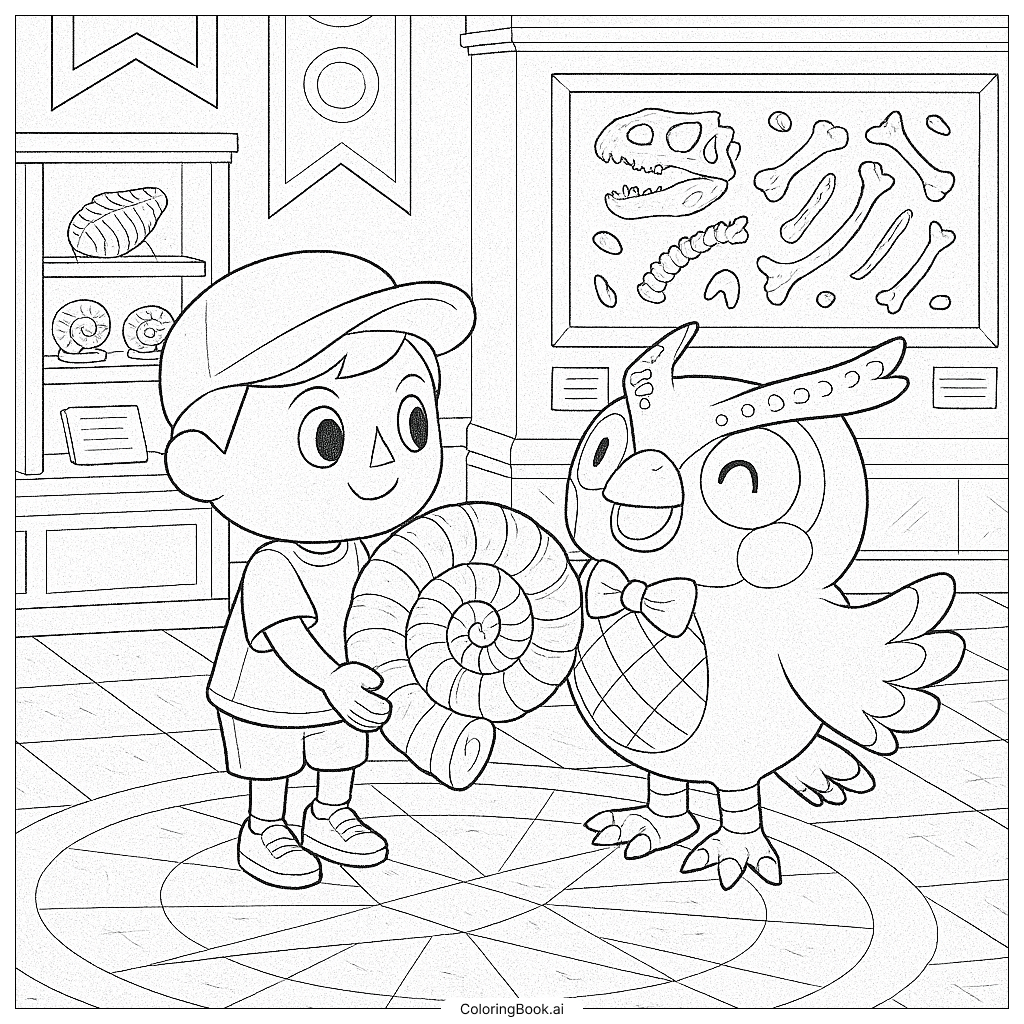
Coloring tips: How to color Large Fossil To Blathers In The Animal Crossing Museum coloring page well?
Try using earthy tones like browns, tans, and creams to bring the fossil to life, giving it a natural, ancient look. Blathers is an owl, so use soft grays and warm browns for his feathers, and add white for his face and chest. The museum walls can be colored with neutral shades such as beige, light gray, or soft greens to keep the focus on the fossil. You can also add vibrant colors to the museum signs and displays to make them stand out. Feel free to use bright colors for Blathers’ eyes and the little details on his outfit to add more charm. Using different shades to highlight shadows can make the fossil and characters look more three-dimensional and exciting.
Coloring challenges: Which parts are difficult to color and need attention for Large Fossil To Blathers In The Animal Crossing Museum coloring page?
• Large Fossil Details: The fossil has many curved segments and layers that require careful coloring to distinguish the different parts and maintain its shape. It can be tricky to avoid coloring over the delicate cracks and lines that make it look authentic.
• Character Textures: Blathers has feathers and clothing that need different coloring techniques to show texture without making it too dark or smudged.
• Small Display Items: The museum signs and background fossils are small and detailed, so coloring inside tight spaces requires patience and precision.
• Maintaining Contrast: It can be challenging to keep the fossil distinct from the background as many parts are close in size and shape, so choosing colors carefully to separate elements is important.
• Layering Shadows: To give depth, shadows must be added gently across the fossil and character without making the image look messy, which can be difficult for younger colorers.
Benefits of coloring books: Advantages of drawing Large Fossil To Blathers In The Animal Crossing Museum coloring page
Coloring this page helps practice fine motor skills because of its detailed lines and shapes. It encourages attention to detail and patience when working on the fossil's intricate parts and smaller museum elements. The scene inspires creativity by allowing choice in earthy and vibrant colors to bring the museum to life. Children also learn to observe real-life textures, like feathers and fossils, and translate those into art. This activity can spark curiosity about history and natural sciences, especially about fossils and museums, making it both fun and educational.