Coloring tips: How to color Anatomy Of The Human Eye Details coloring page well?
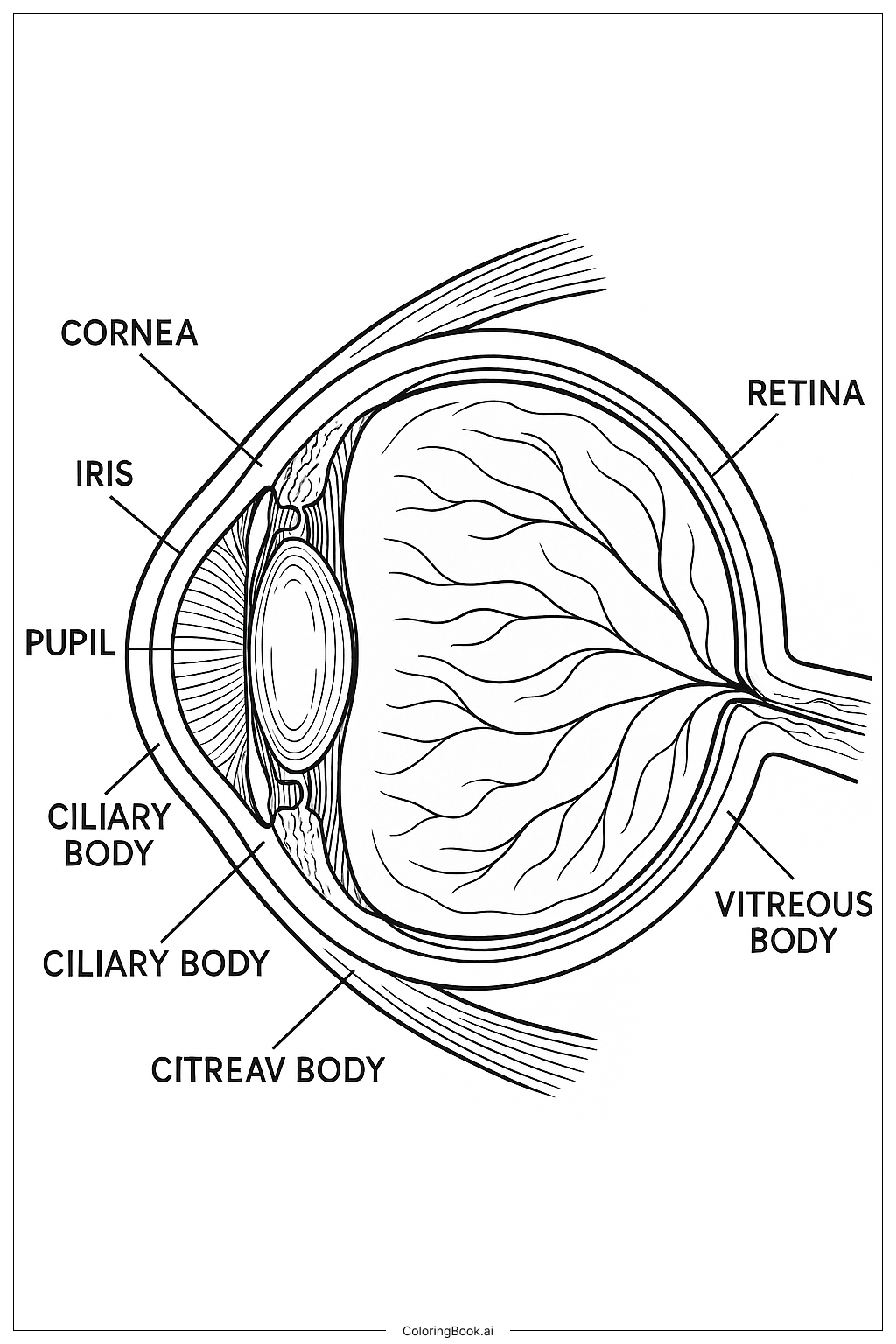
Use bright colors to make each part of the eye stand out clearly. For example, color the iris in shades of blue, green, or brown to represent different eye colors. The pupil can be colored black. Use light shades like pale yellow or white for the lens to show its transparency. Color the retina in red or pink tones to highlight its delicate tissue. For the optic nerve and muscles, choose soft browns or grays. You can use colored pencils or markers to stay inside the lines carefully. Try blending colors gently where parts overlap to create a smooth look. This will make the image informative and visually appealing for learning.
Coloring challenges: Which parts are difficult to color and need attention for Anatomy Of The Human Eye Details coloring page?
• Small Details: Many parts of the eye are tiny and need careful coloring to avoid going outside the lines. This requires fine motor skills and patience.
• Curved Lines: The round shape of the eye and its internal parts have many curves, which can be challenging to follow precisely.
• Different Textures: Some parts like the iris and retina have dotted or patterned areas, so using appropriate shading techniques is important to show texture.
• Color Overlap: Some sections overlap or are very close, needing careful color separation to keep the image clear and easy to understand.
• Label Areas: There are small spaces near the labels where coloring must be neat so the words remain visible and readable.
Benefits of coloring books: Advantages of drawing Anatomy Of The Human Eye Details coloring page
Coloring this image helps children and learners understand the human eye’s anatomy in an engaging way. It improves concentration as they focus on coloring small parts carefully. The activity promotes fine motor skills by working within detailed sections. Using different colors for each component aids memory retention by associating colors with structures. It also encourages curiosity about biology and how sight works. Coloring this anatomy page is an educational and creative exercise that combines art with science, making learning fun and memorable.