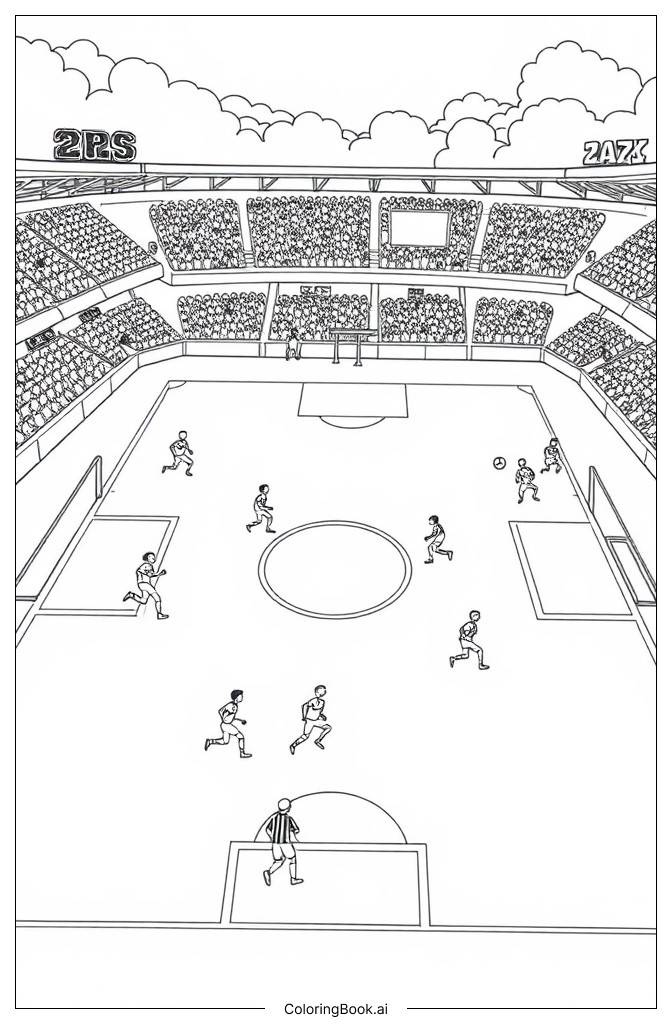
Coloring tips: How to color Football Field Layout coloring page well?
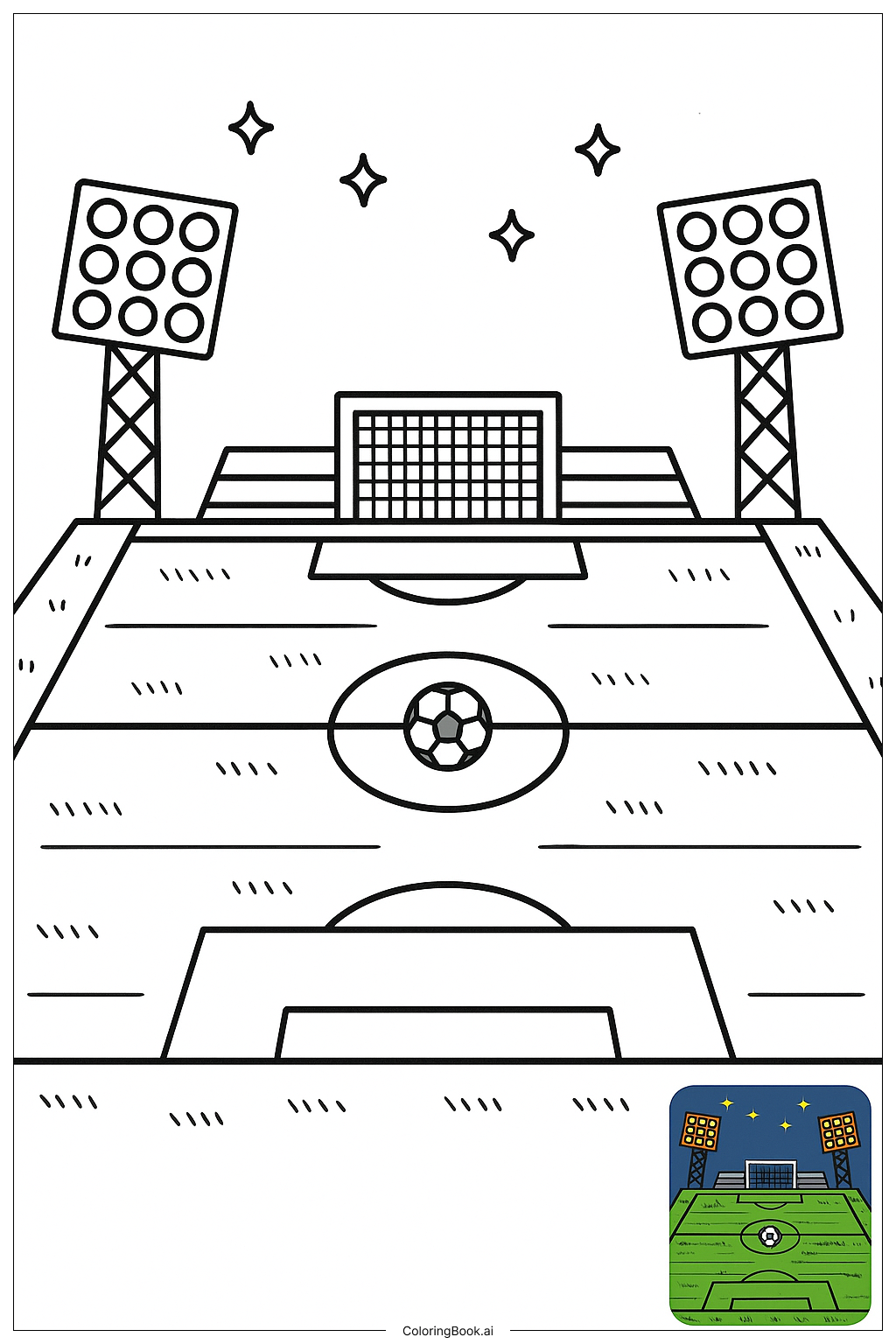
Use green shades to color the grass area of the field, varying between dark and light green for a realistic look. Yellow or white colors work well for the yard lines and hash marks to make them stand out clearly. You can use bright colors such as red or blue to fill in the end zones creatively, maybe with stripes or patterns. The goalposts can be colored yellow or gold, contrasting nicely with the field. Try adding shadows or slight gradients in the grass to give depth. Keep the sidelines and numbers white or light gray for visibility. Have fun experimenting with your favorite colors while keeping the main field elements easy to recognize.
Coloring challenges: Which parts are difficult to color and need attention for Football Field Layout coloring page?
• Detailed Yard Lines: The numerous fine yard lines and hash marks require careful, precise coloring to avoid blurring or overlapping lines. Staying within these narrow spaces can be tricky, especially for younger children. • Symmetry and Proportions: Ensuring colors are balanced on both halves of the field can be challenging because the layout is symmetrical. Coloring one side differently may look uneven. • Small Text and Numbers: The yard markers and numbers are small and need steady hands to color neatly without smudging outside the lines. • Goalposts and Boundary Lines: These small, thin features require attention to avoid mixing colors on the thin lines or goalpost poles. • Uniform Color Blocks: Large sections like the field’s main grass area benefit from consistent shading, which can be hard to achieve without streaks or uneven patches.
Benefits of coloring books: Advantages of drawing Football Field Layout coloring page
Coloring this American Football field layout helps improve attention to detail and hand-eye coordination, especially when focusing on the many fine lines and small numbers. It encourages understanding of spatial relationships, as the field markings represent real measurements on the playing field. The structured design offers a fun way to practice symmetry and pattern recognition by balancing colors on either side. For children interested in sports, it connects creativity with learning about American Football rules and field setup. Additionally, coloring this layout can build patience and concentration through careful coloring within narrow spaces.