Coloring tips: How to color College Football League coloring page well?
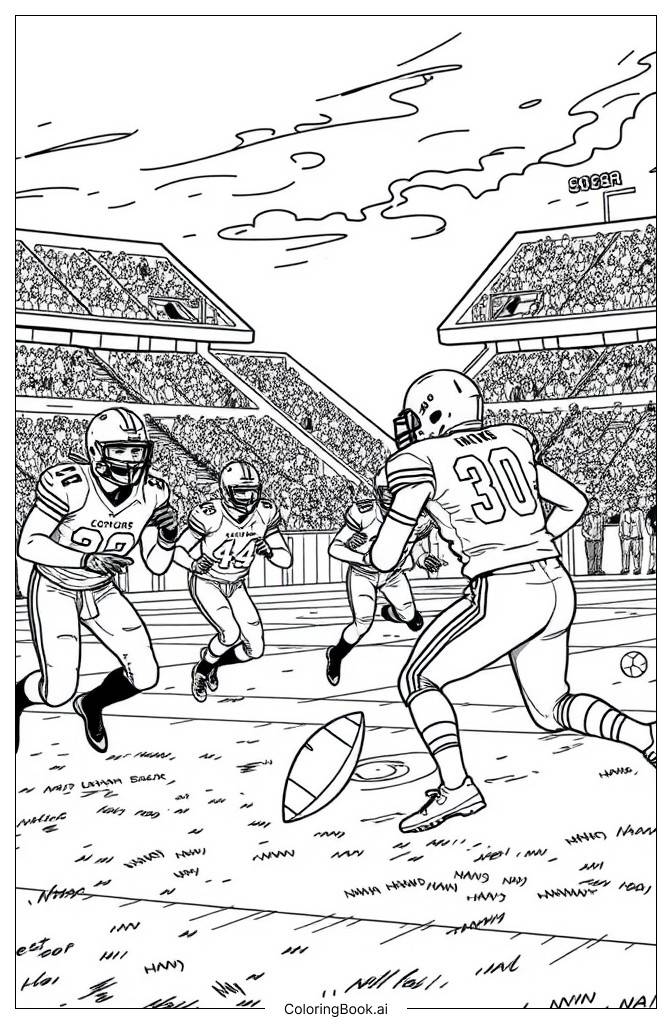
Start with the helmet and choose your favorite college team colors. Many college teams use bold combos like red and white, blue and gold, or orange and black. Color the jersey and pants to match the helmet for a uniform look. Use a darker shade of the same color on the shoulder pads and arm guards to add depth. The football itself is typically a warm brown, with white laces. Use light gray or silver for the face guard and helmet hardware. For the cleats, black or dark brown works great. Fill in the background with bright crowd colors or a green field to bring the whole scene to life. Let kids pick their own team colors and make it personal.
Coloring challenges: Which parts are difficult to color and need attention for College Football League coloring page?
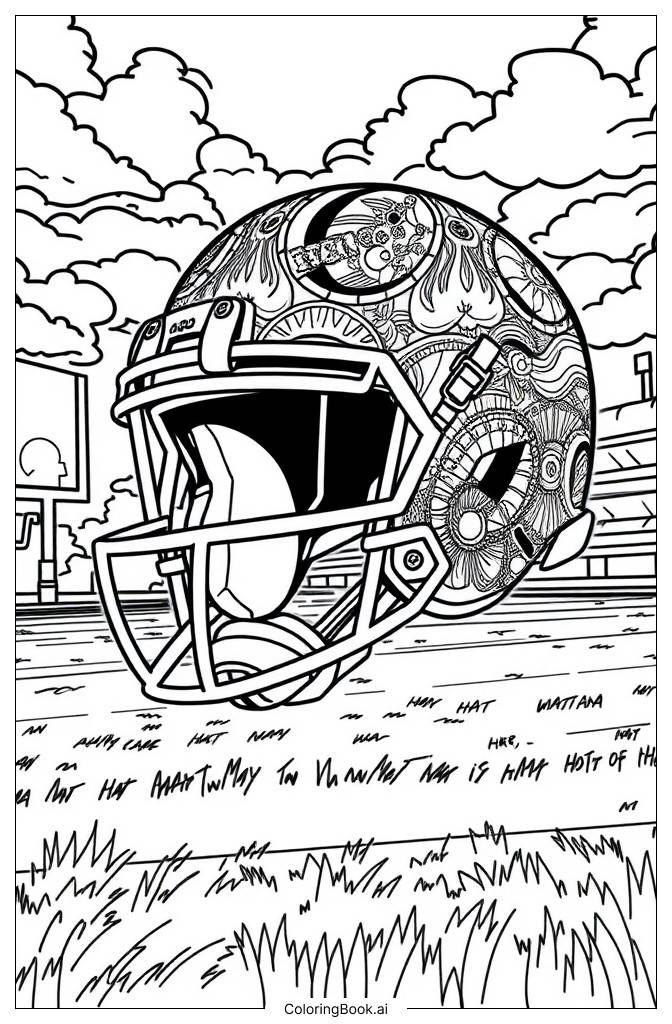
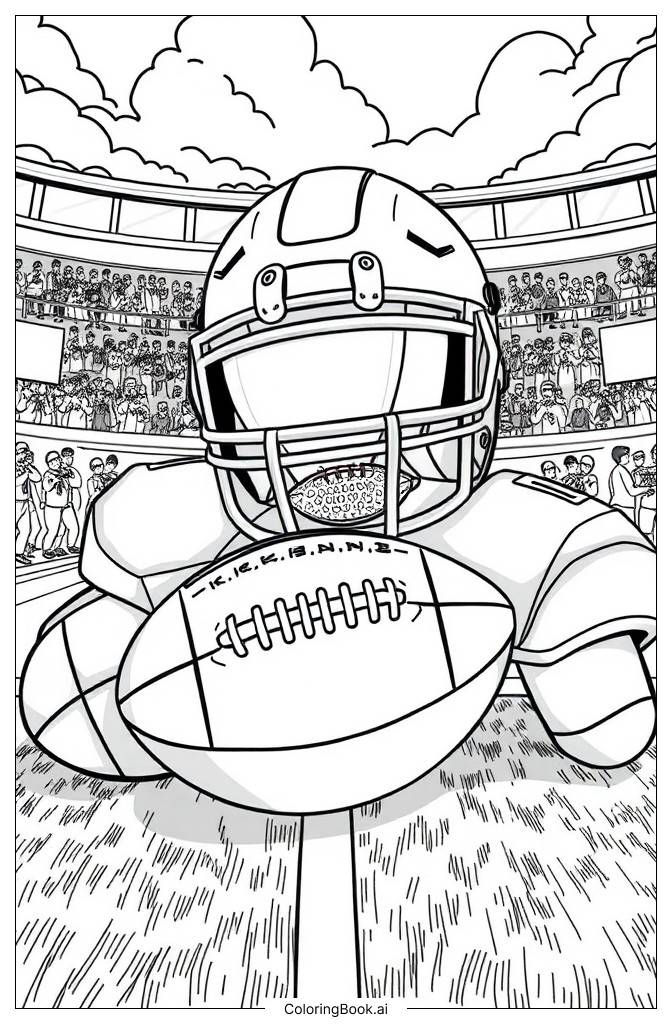
• Helmet Details: The helmet has a face guard made up of several curved bars, a chin strap, and vent holes. Staying inside these small, curved sections without going over the lines takes a steady hand. Younger colorists may find it helpful to use a fine-tipped marker or a sharpened colored pencil for these tight areas.
• Jersey Numbers and Lettering: College football jerseys feature large numbers on the front and back, often outlined with a contrasting color. Coloring inside the number outline while adding a border shade requires patience. Using two tones — a base fill and a darker outline color — will make the numbers pop without muddying the design.
• Shoulder Pads and Uniform Layers: The overlapping pads, arm sleeves, and jersey create multiple layered sections that sit close together. Choosing slightly different shades for each layer helps separate them visually. This is a common challenge for kids who are still building color contrast awareness.
• Football Laces and Texture: The football has curved stitch lines and white laces that contrast with the brown leather. Carefully coloring around the lace section without covering it, then adding thin white highlights, gives the ball a realistic three-dimensional feel. This level of detail can be tricky for younger colorists.
• Background Crowd and Field: If the background includes stadium seats or crowd figures, these small repeating shapes can be time-consuming to fill. Using a consistent pattern — like alternating two team colors across the crowd — keeps it manageable and visually exciting.
Benefits of coloring books: Advantages of drawing College Football League coloring page
Coloring this college football page offers a great mix of fun and learning for kids of all ages. It helps build fine motor skills as children carefully trace the edges of helmets, jerseys, and pads with their coloring tools. Staying within the lines strengthens hand-eye coordination, which supports writing and drawing skills in school.
Choosing team colors encourages creative decision-making and personal expression. Kids who have a favorite college team will love recreating their colors, while others can invent their own. This kind of imaginative play builds confidence.
The complexity of the uniform — with its many sections, layers, and gear — teaches kids to think about color contrast and how different shades work together. This is an early introduction to basic design thinking.
Focusing on a detailed image also helps develop concentration and patience. Completing a full, intricate page gives kids a real sense of accomplishment. For fans of American Football, this page connects a beloved sport to a hands-on creative activity, making the experience even more engaging and memorable.