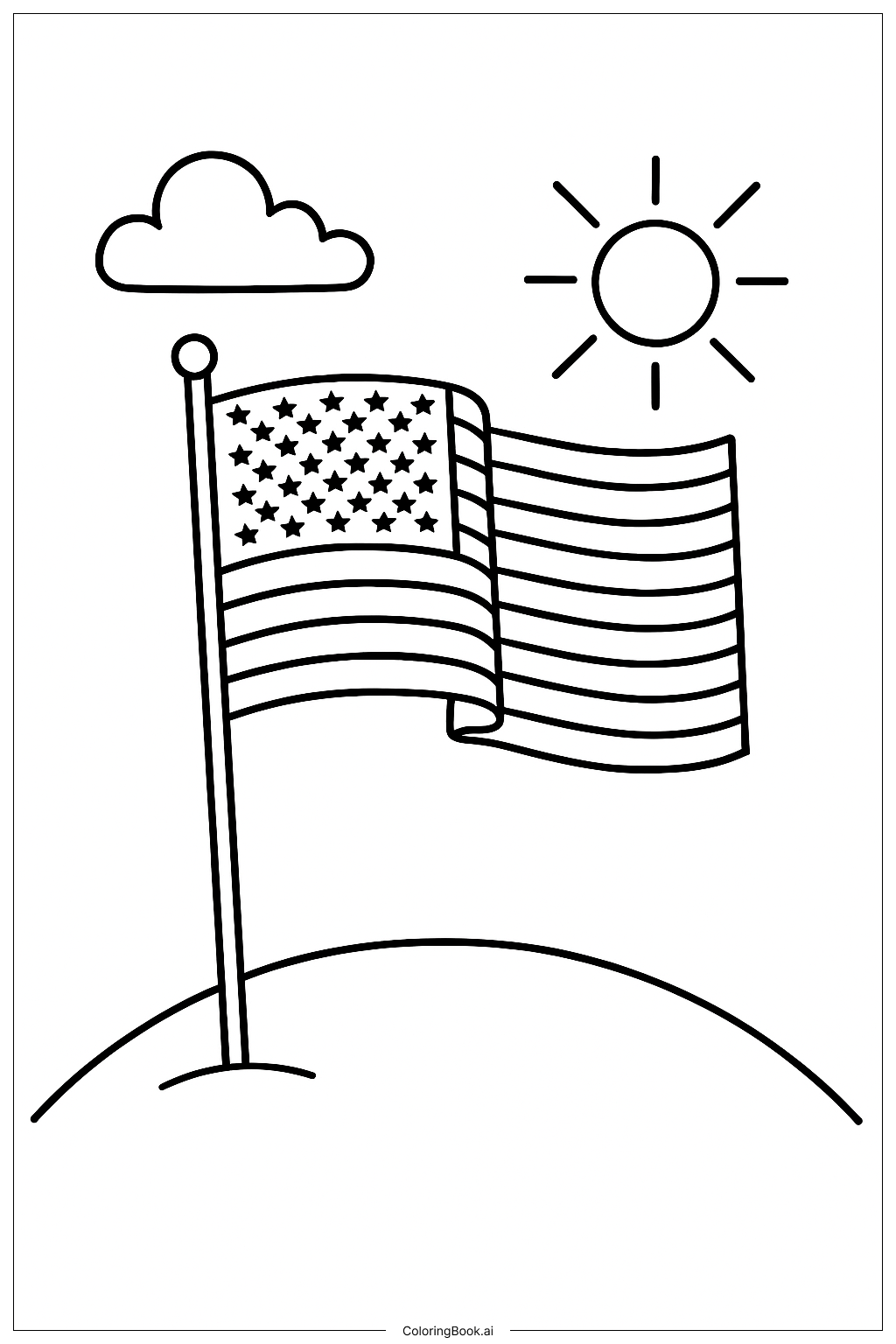
Coloring tips: How to color American Flag Standing On Hill coloring page well?
Start with the flag itself. Use bold red for the alternating stripes and crisp white for the others. Color the canton a deep, rich blue, then fill in each star with white. Take your time with the stars — there are fifty of them, so work slowly and carefully. For the flagpole, use a light silver or gray. The hill can be colored with bright or medium green, and you can add darker green shading along the slopes to give it dimension. Color the sky a soft sky blue, leaving white areas for the clouds. You can add a light yellow or orange tint near the horizon to suggest sunlight. If you want, use a blending technique with colored pencils to make the sky look smooth and gradual. Keep the overall palette bright and bold to capture the patriotic spirit of the scene. This image works great with crayons, colored pencils, or markers.
Coloring challenges: Which parts are difficult to color and need attention for American Flag Standing On Hill coloring page?
• Flag Stripes Accuracy: The American flag has thirteen alternating red and white stripes. Keeping each stripe neat and evenly spaced inside the waving flag shape is a real challenge. Because the flag is shown in motion, the stripes curve and ripple, making straight, clean coloring much harder than it looks. Take your time and follow each stripe's edge carefully.
• The Star Field: The blue canton in the upper left corner of the flag contains fifty small stars arranged in rows. These tiny stars require a very fine-tipped tool to color cleanly. Trying to keep each star white while filling the surrounding area blue demands patience and a steady hand. Younger colorists may find this the most difficult part of the whole image.
• The Waving Flag Shape: Because the flag is mid-wave, its overall outline is not flat or rectangular. The rippling edges and curved folds mean colors may need to follow the natural contours of the fabric rather than straight lines. This requires careful observation and controlled coloring strokes.
• The Hill and Landscape: Shading the grassy hill realistically involves using more than one shade of green. The rounded slope of the hill needs lighter tones at the top where light hits and darker tones along the sides and base. Achieving that smooth gradient can be tricky for beginners.
• Sky and Clouds: Blending the sky blue smoothly around the cloud shapes without coloring over them takes control and patience. Leaving the clouds naturally white while building up color in the sky areas requires careful edge work and light pressure with your coloring tool.
Benefits of coloring books: Advantages of drawing American Flag Standing On Hill coloring page
Coloring this American Flag Standing On Hill page offers a wonderful mix of fun and learning. As kids carefully color the thirteen red and white stripes, they naturally strengthen their fine motor skills and develop hand-eye coordination. Working around the small stars in the blue canton requires focus and patience, helping children build concentration skills they use in school and everyday life.
This image also sparks curiosity about American history and national symbols. As kids color, parents and teachers can share simple facts about the flag, its colors, and what it represents. This turns a creative activity into an easy, enjoyable history lesson.
For older children and Adults, the detailed sections of this page — the rippling fabric, the grassy hill, and the open sky — offer a satisfying creative challenge. Choosing colors, experimenting with shading, and blending tones encourages artistic thinking and personal expression.
Coloring is also a calming activity. The quiet focus it requires can help reduce stress and anxiety in both children and Adults. It gives young colorists a sense of pride and accomplishment when they finish. Displaying the completed page is a great way to celebrate creativity and show a little patriotic spirit at the same time.