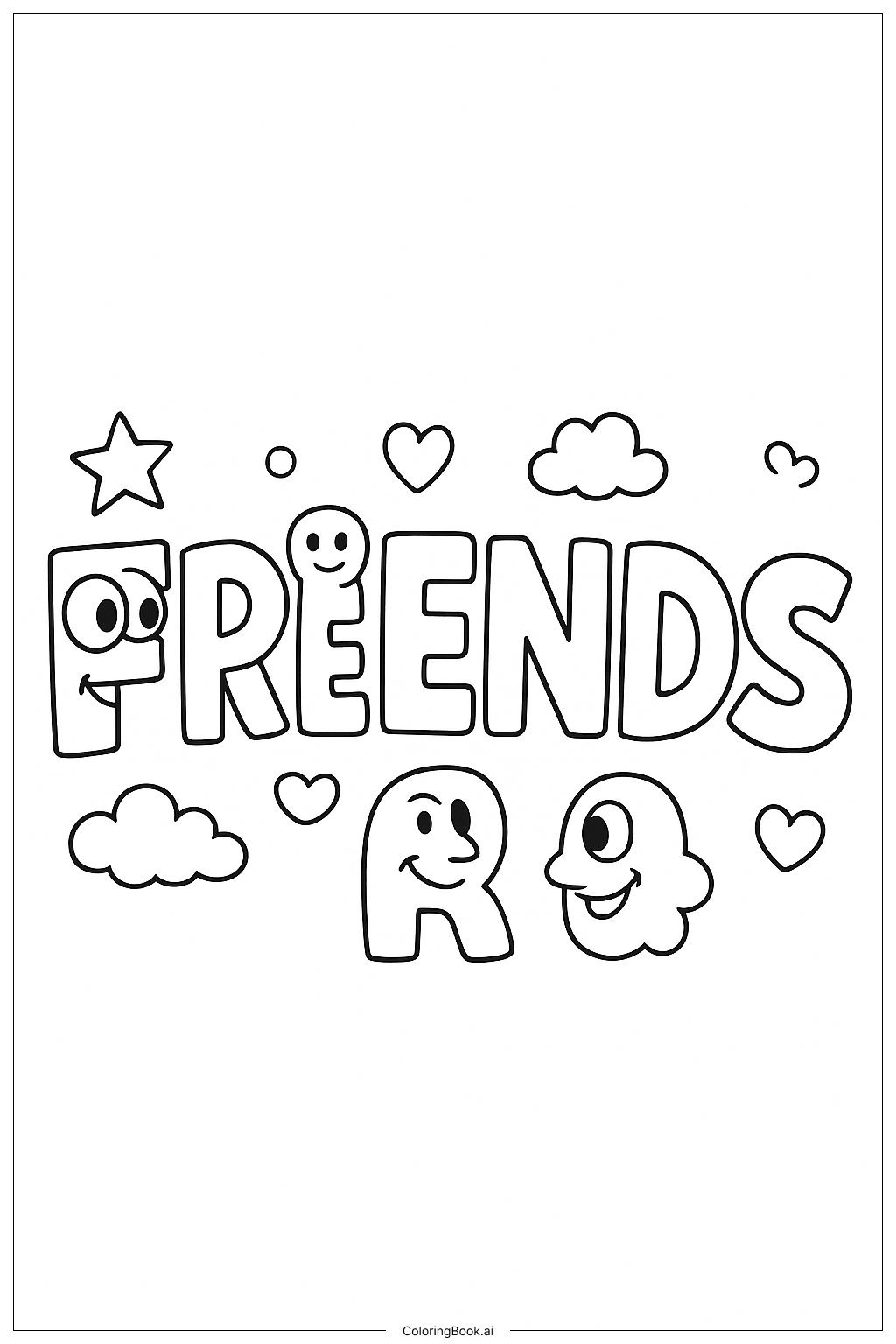
Coloring tips: How to color Alphabet Lore Letters Spelling FRIENDS coloring page well?
For this picture, try using bright and diverse colors for every letter to make each one stand out. Use shades like red, blue, yellow, green, orange, purple, and pink to bring the characters to life. You can keep the background light or white so the colorful letters pop. Try coloring the eyes with whites and a small black dot to give them expression. Feel free to add patterns like stripes or dots inside the letters for extra fun. Using crayons, markers, or colored pencils will work well. Make sure to color carefully inside the lines to practice fine motor skills.
Coloring challenges: Which parts are difficult to color and need attention for Alphabet Lore Letters Spelling FRIENDS coloring page?
• Letter Details: Each letter of FRIENDS has small features like eyes and facial expressions that need attention to color carefully without crossing the lines.
• Different Shapes: The letters have varying shapes and sizes, which can make it tricky to choose colors that look balanced across the whole word.
• Fine Lines: There are thin outlines and small spaces within some letters, requiring patience and a steady hand.
• Consistent Coloring: Keeping the colors bright and even can be challenging for younger children who are still developing coloring skills.
• Creativity Balance: Deciding whether to color the letters uniformly or with different patterns might be overwhelming, so planning ahead is helpful.
Benefits of coloring books: Advantages of drawing Alphabet Lore Letters Spelling FRIENDS coloring page
Coloring this image helps children learn letter recognition and spelling in a fun way. It encourages creativity by letting kids choose colors and patterns for each letter. Coloring the small details improves hand-eye coordination and fine motor skills. The joyful faces on the letters can engage children emotionally, making learning positive. Practicing patience and focus during coloring also supports concentration and mindfulness. Overall, it combines educational value with enjoyable artistic expression for children aged 4 to 16.