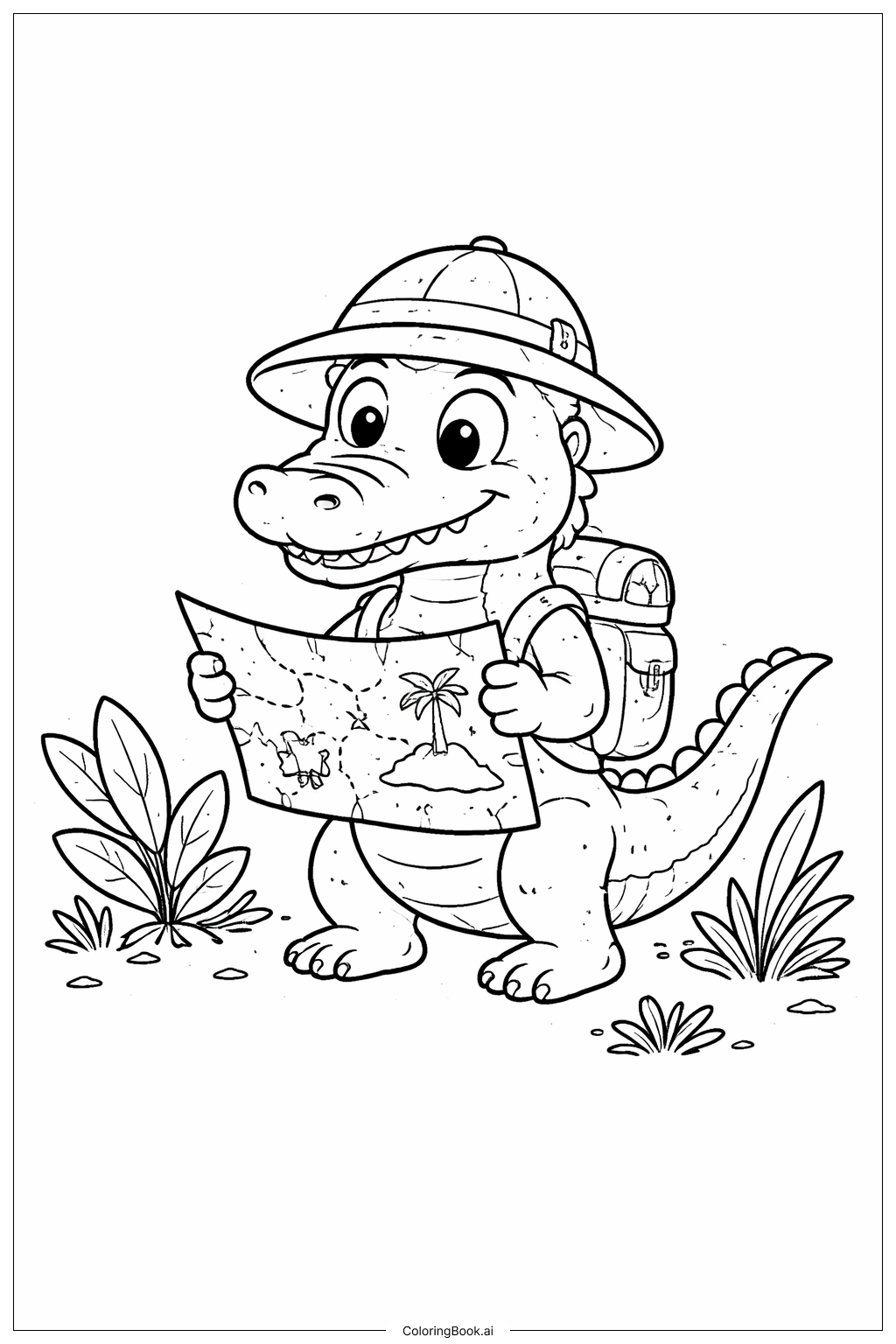
Coloring tips: How to color Alligator Sleeping coloring page well?
Start with the body by using different shades of green for the main skin. Try dark green for the back and top areas, and a lighter green or yellowish-green for the belly and underside. Use gray or brown tones to add depth to the scales and bumpy ridges along the spine. The claws can be colored in light tan or off-white. For the teeth, use white or cream with a slight yellow tint to make them look natural. If you want to add a fun background, soft blues and greens can suggest a swampy riverbank. Earthy browns work well for muddy ground beneath the sleeping alligator. Add shadows under the belly and tail using darker shades of the base colors to give the image a three-dimensional look. Kids can also get creative and use teal, olive, or even bright colors to make their alligator unique and fun.
Coloring challenges: Which parts are difficult to color and need attention for Alligator Sleeping coloring page?
• Scale Texture Consistency: The alligator's body is covered in many small, overlapping scales and bumpy ridges. Keeping a consistent color pattern across all these tiny sections is tricky. It takes patience to color each scale carefully without going outside the lines or losing the natural texture of the skin.
• Body Shading and Depth: Creating the illusion of a rounded, three-dimensional body can be challenging. The back should appear darker than the belly, and the sides need a gradual transition between shades. Blending colors smoothly in these areas requires practice, especially for younger colorists.
• Belly and Underside Contrast: The soft underbelly of the alligator looks different from its rough, scaly back. Choosing a lighter, contrasting color for this area while keeping it visually connected to the rest of the body can be difficult to balance without the image looking flat or disconnected.
• Fine Details on the Face: The snout area features small lines, nostrils, and partially visible teeth. These are small and close together, making them hard to color neatly. Using a fine-tipped colored pencil or marker is recommended to stay within the narrow outlines and avoid smudging nearby areas.
• Claws and Leg Definition: The short legs and small claws are compact and closely spaced. Coloring them individually while keeping them distinct from the surrounding body requires careful attention. A steady hand and thin tools work best to bring out the detail in these smaller features.
Benefits of coloring books: Advantages of drawing Alligator Sleeping coloring page
Coloring this sleeping alligator image offers a wide range of benefits for children and young learners. First, it builds fine motor skills as kids carefully color within the detailed scale patterns and small features like claws and teeth. This kind of precise hand movement strengthens the muscles used for writing and drawing.
Second, it encourages color awareness and creativity. Choosing shades of green, brown, and gray — or even imaginative colors — helps children learn how colors work together and how shading can create depth and texture.
Third, focusing on a detailed image like this improves concentration and patience. Children learn to slow down, pay attention to small areas, and complete a task step by step.
Fourth, this image sparks curiosity about nature and animals. After coloring, kids may want to learn more about alligators — where they live, what they eat, and how they behave. This connects art with science in a natural and enjoyable way.
Finally, completing the coloring page gives children a sense of accomplishment and pride. Seeing their finished artwork builds confidence and motivates them to take on new creative challenges. Coloring is a calm, screen-free activity that supports emotional well-being and relaxation for kids of all ages.