Coloring tips: How to color Alligator Reading Book coloring page well?
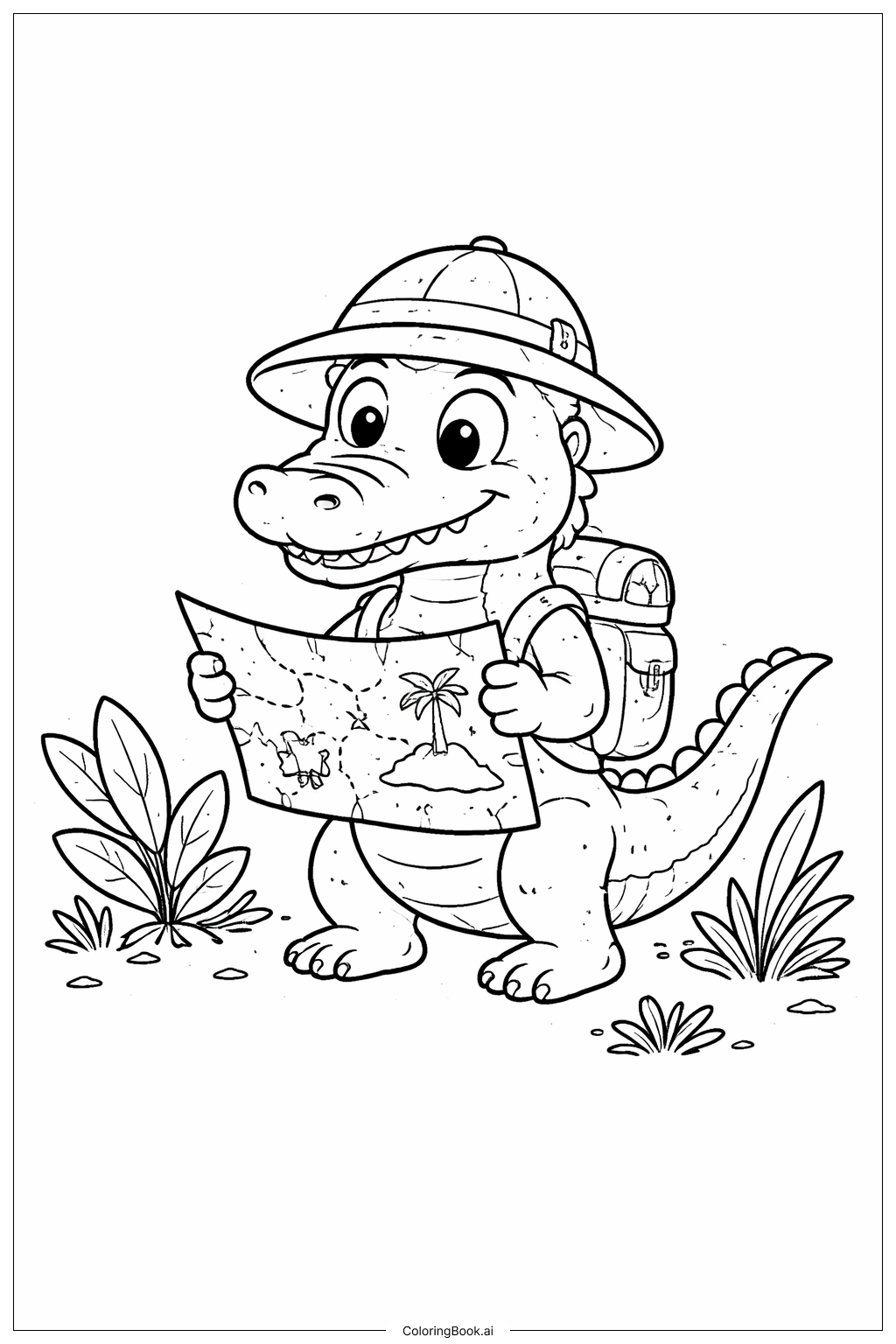
Use green or light green shades for the alligator's body to make it look natural. Color the spikes and belly with a lighter or different green tone for contrast. The book can be bright, like red, blue, or yellow, to stand out. The bench can be brown or gray to look like wood or stone. Use green shades for the tree leaves and brown for the trunk. Feel free to use different colors for the background or add details like grass or sky in blue.
Coloring challenges: Which parts are difficult to color and need attention for Alligator Reading Book coloring page?
1. Coloring small parts, like the alligator's eyes and fingers, requires careful attention to stay inside the lines.
2. The spikes on the back are thin and close together, which can be hard to color neatly.
3. The bench has simple shapes that need even coloring to look smooth.
4. Balancing the light and dark shades on the alligator's body to show its shape can be challenging.
5. Coloring the tree leaves evenly without missing spots or coloring outside the lines might be tricky for younger kids.
Benefits of coloring books: Advantages of drawing Alligator Reading Book coloring page
Coloring this picture helps children practice their hand control and fine motor skills. It also encourages creativity as they choose colors for different parts of the alligator, book, and tree. The image promotes focus and patience because of the different details. Kids can learn about colors in nature, like green for animals and trees, as well as experiment with fun colors for the book and bench. Overall, coloring this page is a fun and relaxing activity that supports learning and artistic expression.