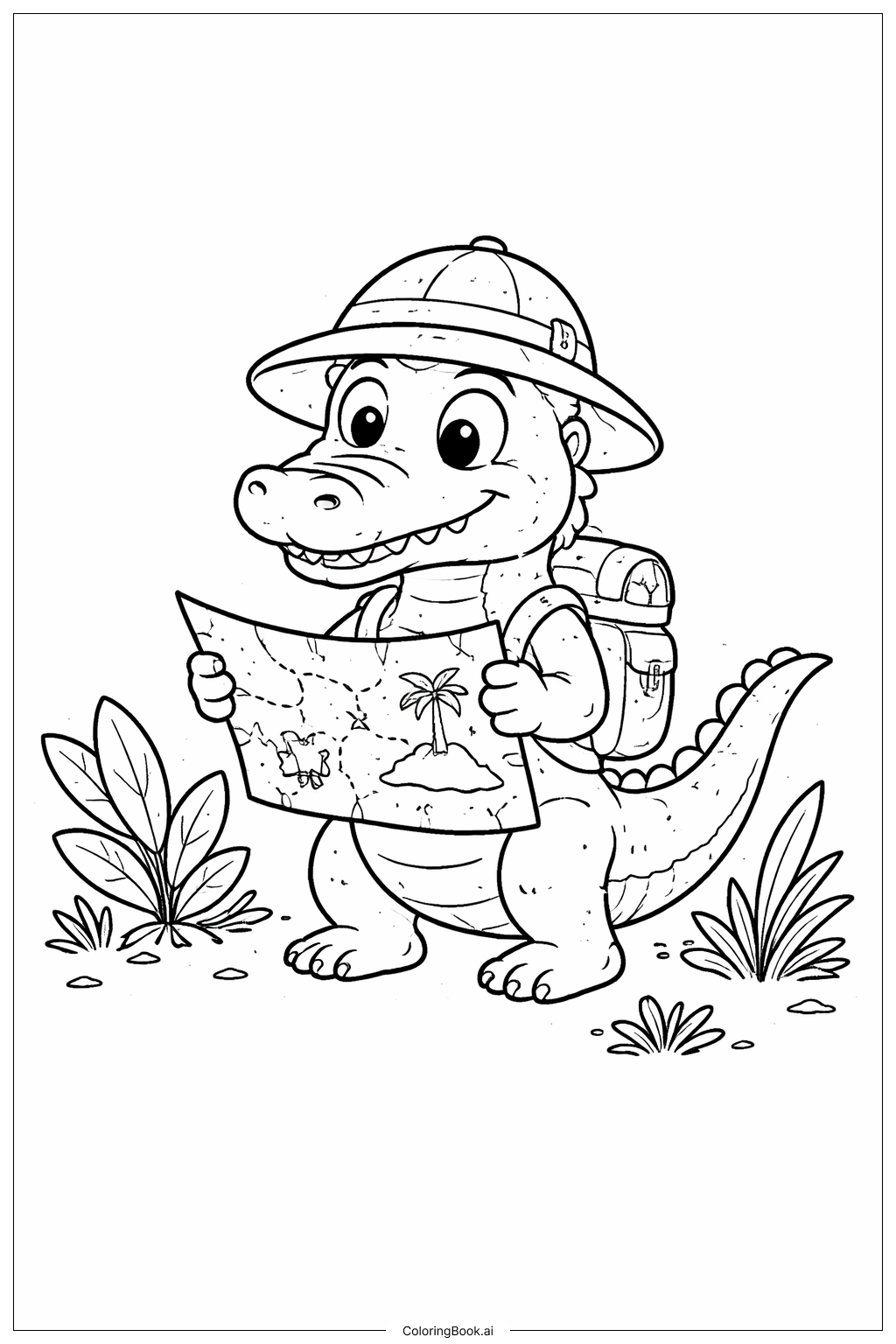
Coloring tips: How to color Alligator On Swing coloring page well?
You can use different shades of green for the alligator’s body to make it look lively. The belly can be colored a lighter green or yellowish shade to add contrast. For the swing, brown or tan colors will bring a natural wood look. The tree branch and leaves can be colored with various green shades, making them look fresh. Don’t forget to color the rope with a slightly darker brown to separate it from the wood. You can also add a blue sky or soft background hues softly to give the picture more depth.
Coloring challenges: Which parts are difficult to color and need attention for Alligator On Swing coloring page?
1. The face of the alligator needs careful coloring to keep the friendly expression clear, especially the eyes and teeth. 2. The small details on the tail and belly require steady coloring inside the lines to avoid overlapping colors. 3. The ropes have narrow spaces that can be tricky to color without going outside the lines. 4. Achieving different shades of green smoothly on the alligator’s body might be challenging for beginners to blend colors well. 5. The branch with leaves has fine lines and small areas that require patience and attention to detail.
Benefits of coloring books: Advantages of drawing Alligator On Swing coloring page
Coloring this picture helps improve fine motor skills by focusing on small details like the alligator’s teeth and tail. It also encourages children to practice color blending, especially with different shades of green. The scene promotes creativity as kids choose colors for natural elements like the tree and swing. Additionally, coloring friendly animal characters can boost confidence and make learning fun.