Coloring tips: How to color Alligator Holding Ball coloring page well?
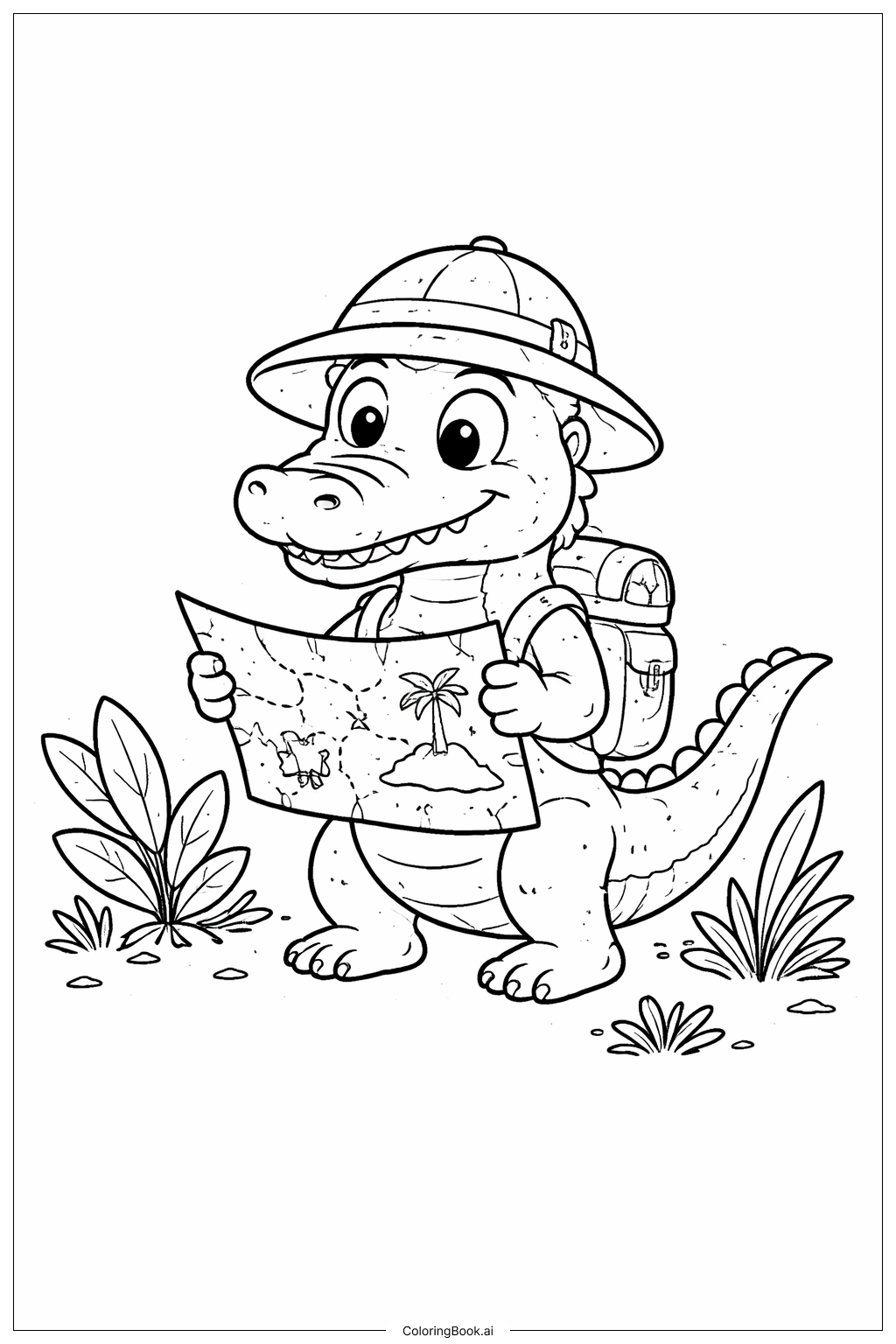
Start with the alligator's body. Green is the most natural choice — try a medium or bright green for the main scales. Use a slightly darker green or olive shade to add depth along the sides, belly edges, and tail. The belly area can be colored a lighter shade, like pale yellow-green or cream, to contrast nicely with the back. For the scales, add small strokes of darker green to make each one stand out. Color the eyes bright yellow or orange with a dark pupil in the center. The teeth can be white or off-white. For the ball, you can go with any color you like — red, blue, orange, or even a multicolored pattern to make it pop. The claws can be colored light gray or tan. Feel free to mix shades and experiment with color combinations to make your alligator truly unique and full of life.
Coloring challenges: Which parts are difficult to color and need attention for Alligator Holding Ball coloring page?
• Scale Texture Detailing: The alligator's body is covered in many individual scales, each with its own defined outline. Carefully coloring each scale without going outside the lines takes patience and a steady hand. Using a fine-tipped colored pencil or marker will help keep each scale neat and clean.
• Shading and Depth on the Body: Creating a realistic or visually interesting look means adding light and shadow across the alligator's rounded body. The top of the body should appear darker, while the sides and belly can be lighter. Blending two or three shades of green smoothly can be tricky, especially for younger colorists.
• Small Facial Features: The alligator's face includes eyes, nostrils, and a wide mouth with teeth. These areas are small and close together, making it easy to accidentally color outside the lines. A thin marker or sharpened pencil works best here to stay precise.
• The Ball Surface: The round ball may look simple, but coloring it evenly — especially if you want to add a highlight or shading to give it a three-dimensional look — requires careful circular strokes and smooth blending. Keeping the edges clean where the ball meets the alligator's hands adds an extra layer of difficulty.
• Claws and Foot Details: The alligator's clawed feet have small, curved nail shapes that are easy to miss or accidentally fill in with the wrong color. Coloring these separately from the rest of the foot helps them stand out and adds a realistic touch to the overall image.
Benefits of coloring books: Advantages of drawing Alligator Holding Ball coloring page
Coloring this cheerful alligator page offers many great benefits for kids and beginners alike. First, it helps build fine motor skills. Carefully staying within the lines of the scales, claws, and facial features trains hand muscles and improves pencil control — skills that carry over into writing and drawing. Second, it encourages creativity. Choosing colors for the alligator's body, the ball, and the background lets kids express themselves freely. There are no wrong choices, which builds confidence. Third, it supports focus and concentration. A detailed image like this one requires patience and attention, helping children practice sitting still and working toward a goal. Fourth, it introduces color theory in a fun way. Experimenting with light and dark greens, or picking a bold color for the ball, teaches kids how colors interact and complement each other. Finally, completing the page gives a sense of pride and accomplishment. Seeing a finished, colorful alligator is rewarding and motivates kids to keep creating. Overall, this page is a wonderful mix of fun and learning.