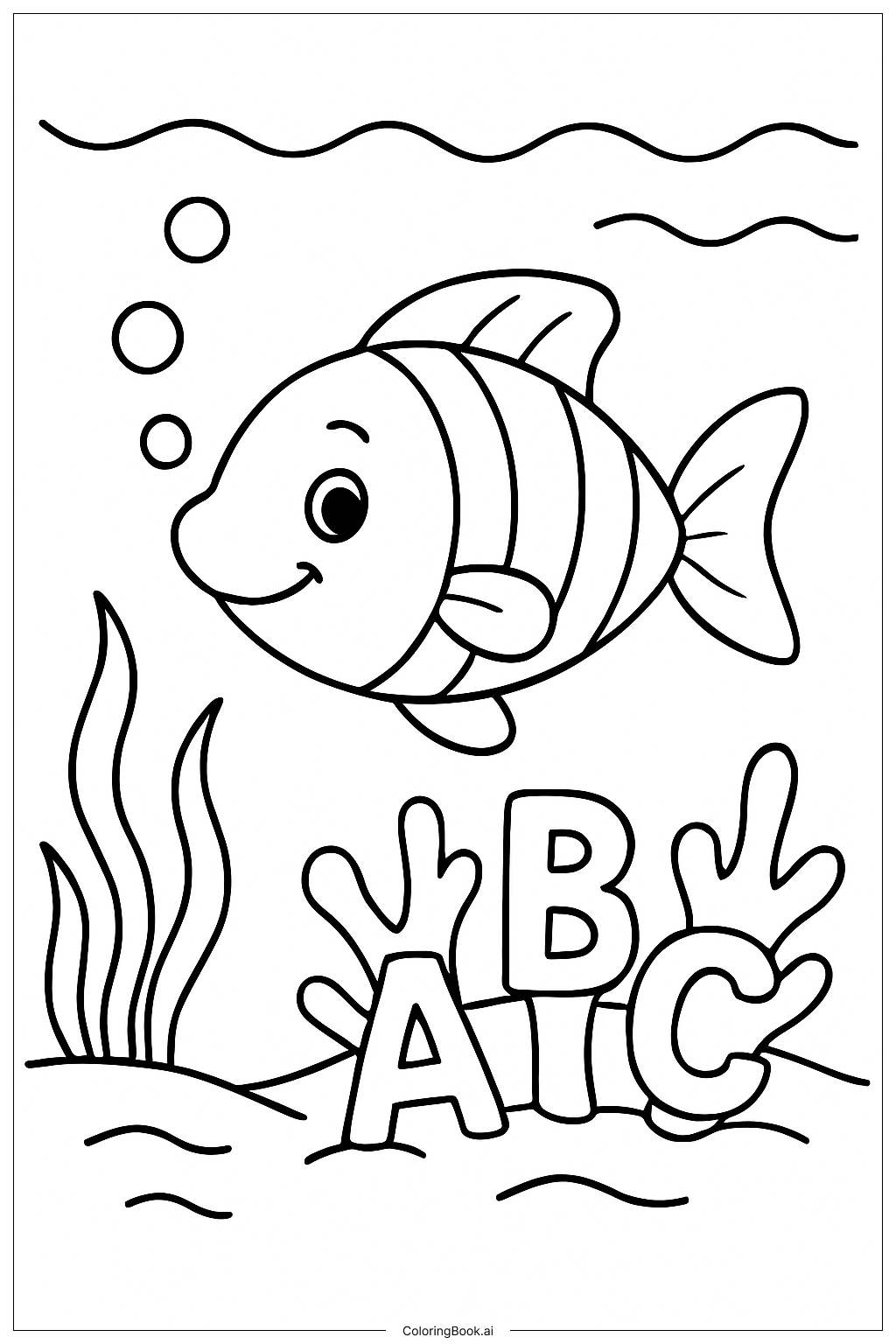
Coloring tips: How to color ABC Undersea Scene coloring page well?
Start with the background by lightly shading the water in soft blues and teals to give depth to the ocean scene. Use darker blue tones near the edges and lighter shades toward the center to create a glowing underwater feel. Color the alphabet letters in bright, bold colors — try giving each letter its own unique color so they stand out clearly. For sea creatures, use realistic or fun colors: orange and white for clownfish, green for sea turtles, pink for starfish, and red for crabs. Coral can be colored in warm pinks, oranges, and purples. Add yellow and lime green to seaweed and underwater plants. Use light purple or white for bubbles, leaving a small spot uncolored to show shine. Take your time with each creature and letter to make every section pop with personality.
Coloring challenges: Which parts are difficult to color and need attention for ABC Undersea Scene coloring page?
• Letter Outlines and Spacing: The alphabet letters are placed throughout the busy scene, and coloring inside their bold outlines without going over the edges can be tricky. The curves of letters like B, C, S, and G require a steady hand and a fine-tipped coloring tool to stay precise.
• Small Sea Creature Details: Many of the ocean animals include tiny features like fish scales, crab claws, turtle shell patterns, and starfish texture. These small details demand patience and careful control, especially for younger children who are still developing fine motor skills.
• Background Water Blending: Creating a smooth, natural-looking ocean background is one of the harder parts of this page. Blending multiple shades of blue and teal without streaks or harsh lines takes practice, particularly when working around so many characters and letters placed throughout the water.
• Coral and Plant Variety: The coral reefs and seaweed plants come in many different shapes and sizes. Deciding which colors to use for each type of plant while keeping the overall scene balanced and visually appealing requires some planning before you begin coloring.
• Keeping Colors Consistent: With so many elements — letters, creatures, plants, and bubbles all sharing the same space — it can be challenging to keep the color choices organized and consistent. Without a plan, colors can start to blend together and make the scene look muddy rather than bright and clear.
Benefits of coloring books: Advantages of drawing ABC Undersea Scene coloring page
Coloring this ABC Undersea Scene page offers a wonderful mix of learning and creativity for children. As kids color each letter alongside its matching sea creature, they naturally reinforce their alphabet knowledge in a fun, low-pressure way. This kind of playful repetition helps young learners connect letters to words and images more easily.
The detailed ocean setting also sparks curiosity about marine life. Children may become interested in learning the names of real sea animals like dolphins, octopuses, and sea turtles while they color them in.
Working through this page builds important fine motor skills. Staying inside the lines, switching between tools, and controlling pressure all strengthen the hand muscles children need for writing.
The process of choosing colors and planning the scene also encourages creative thinking and decision-making. Kids learn to experiment with color combinations and develop their own artistic style.
Coloring is also naturally calming. Focusing on a detailed, engaging page like this one helps children slow down, concentrate, and enter a relaxed, focused state. This is especially helpful for children who need a quiet, screen-free activity.
Overall, this page is a fantastic tool for combining early literacy, ocean exploration, artistic expression, and mindful focus all in one enjoyable activity.