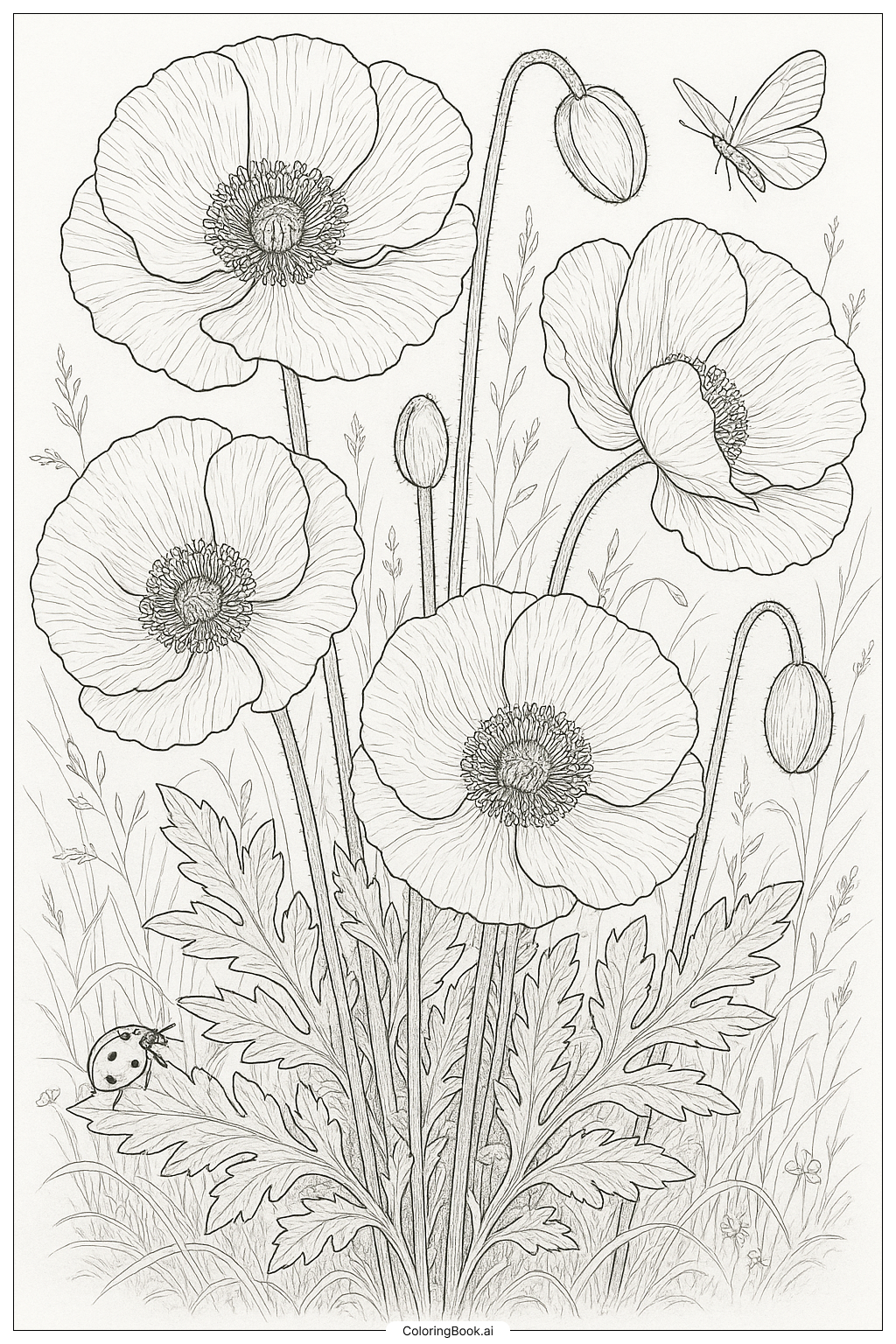
Coloring tips: How to color Realistic Poppy Flower Botanical Illustration coloring page well?
To color this realistic poppy flower, start with bright red or orange shades for the petals. You can blend lighter shades like coral or peach near the edges to show sunlight hitting the flower. For the center, use dark purple or black to bring out the detailed parts inside the flower. The leaves can be colored in various shades of green, such as olive or emerald, to show depth and texture. Adding small touches of yellow or light green on the veins can give extra life to the leaves. You can even use some brown or dark green for the stem to keep it natural and realistic.
Coloring challenges: Which parts are difficult to color and need attention for Realistic Poppy Flower Botanical Illustration coloring page?
• Petal Shading: Capturing the soft texture and subtle color changes on the poppy petals can be tricky. The petals have thin folds and light reflections that require careful blending to look lifelike.
• Fine Details in the Flower Center: The stamen and pistil have many tiny parts. Coloring these accurately takes patience and a steady hand to avoid losing the intricate look.
• Leaf Veins: The veins in the leaves are narrow and detailed. Coloring them without blurring requires focus and fine coloring tools.
• Maintaining Botanical Realism: Balancing bright colors while keeping a natural look is challenging. Overly bold colors can make the flower look less realistic.
• Layering Colors: Using multiple shades to show depth means layering colors carefully to avoid muddying the image.
Benefits of coloring books: Advantages of drawing Realistic Poppy Flower Botanical Illustration coloring page
Coloring this poppy flower illustration helps improve focus and fine motor skills because of the detailed parts. It encourages creativity by letting you experiment with different shades of red, orange, and green. For children, it teaches they can observe nature and translate what they see into art. The realistic style supports learning about flowers and plants through drawing. Overall, coloring this image can be relaxing and satisfying, offering a sense of accomplishment once the flower comes to life with colors.