Coloring tips: How to color Father's Day Science Lab Experiment coloring page well?
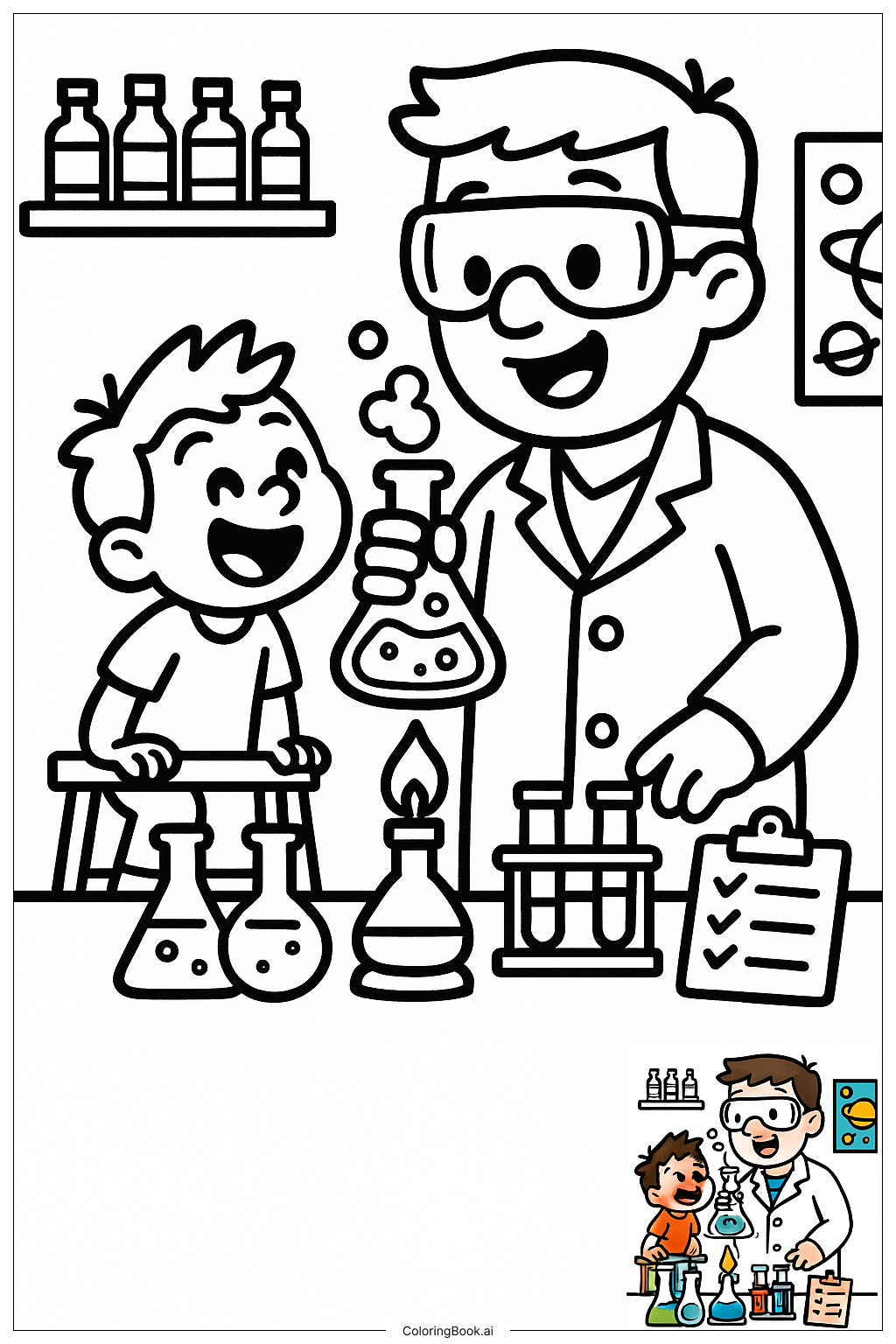
For this image, bright and lively colors can bring the scene to life. Use a crisp white or light gray for the lab coats to keep the scientific feel. The goggles can be shaded with transparent blues or greens for a realistic glass look. Experiment with bright colors like green, blue, orange, or purple for the liquids inside the test tubes and flasks to make the bubbles and smoke stand out. Skin tones should be warm and natural, while the lab table and shelves can be soft browns or greys to contrast nicely with the colorful experiment materials. Background elements like books can have varied colors to add depth but keep them subtle to avoid distraction. This approach will create a vibrant, engaging portrayal of a father and child sharing science fun.
Coloring challenges: Which parts are difficult to color and need attention for Father's Day Science Lab Experiment coloring page?
- Small details like bubbles, smoke wisps, and glass reflections require careful shading and precision to look realistic.
- The facial expressions need subtle color gradients to show emotion clearly without overwhelming the face.
- Balancing bright colors in the liquids with more neutral tones in clothing and background demands attention to avoid clashing.
- The various lab equipment pieces have different shapes and transparencies, which can be tricky for younger colorists aiming for a neat finish.
- Filling in tiny parts like the goggles and book spines without coloring outside the lines requires steady hand control.
Benefits of coloring books: Advantages of drawing Father's Day Science Lab Experiment coloring page
Coloring this image helps improve focus and attention to detail, especially when working on small features like bubbles and lab tools. It encourages creativity by mixing colors for liquids and learning about scientific themes through art. Children can also develop fine motor skills by carefully coloring inside lines and handling different shapes. Additionally, this activity can inspire curiosity about science and enhance bonding as kids imagine the story behind the experiment. Overall, it’s both a fun and educational experience that combines learning with artistic expression.